


Hey there! As a supplier of Bearing Steel Grit, I'm super excited to share with you how this amazing product performs in descaling applications. In this blog, I'll dive deep into its features, advantages, and real - world performance in getting rid of those pesky scales.
First off, let's talk about what descaling is. Descaling is all about removing scale, which is that layer of oxidized metal that forms on the surface of steel and other metals during processes like hot rolling, forging, or heat treatment. This scale can cause all sorts of problems, such as reducing the quality of the final product, interfering with subsequent manufacturing processes, and even affecting the corrosion resistance of the metal.
So, how does Bearing Steel Grit come into play here? Well, Bearing Steel Grit is a high - quality abrasive material. It's made from high - carbon bearing steel, which gives it some unique properties that make it perfect for descaling.
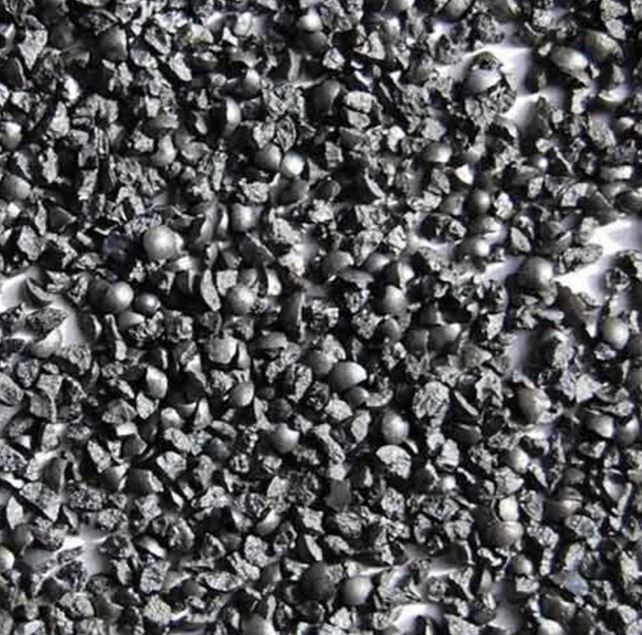
One of the key features of Bearing Steel Grit is its high hardness. This is a major plus in descaling applications. When you're trying to remove scale, you need an abrasive that can really dig in and break up that tough oxidized layer. The high hardness of Bearing Steel Grit allows it to do just that. It can effectively chip away at the scale, leaving a clean and smooth surface behind. You can learn more about High Hardness Steel Grit on our website.
Another great thing about Bearing Steel Grit is its angular shape. Unlike some other abrasives that may be more rounded, the angular shape of Bearing Steel Grit provides a cutting edge. When it impacts the surface of the metal, it acts like little blades, slicing through the scale. This makes the descaling process much more efficient.
The durability of Bearing Steel Grit is also a big advantage. It can withstand multiple impacts without breaking down easily. This means that you get more bang for your buck. You don't have to keep replacing the abrasive as often, which can save you a lot of money in the long run.
Now, let's look at some real - world scenarios of how Bearing Steel Grit performs in descaling. In the automotive industry, for example, parts like engine blocks, transmission components, and suspension parts often have scale on them. Using Bearing Steel Grit in a blasting process can quickly and effectively remove this scale. The clean surface that results is essential for proper painting, plating, or other finishing operations.
In the construction industry, steel beams and other structural components can develop scale during manufacturing. Bearing Steel Grit can be used to descale these large - scale components, ensuring that they have a smooth surface that's ready for further treatment or installation.
When it comes to the actual descaling process, Metal Grit Blasting is a common method that uses Bearing Steel Grit. In this process, the grit is propelled at high speed onto the surface of the metal using a blasting machine. The impact of the grit on the scale causes it to break off, leaving the metal surface clean.
One specific type of Bearing Steel Grit that's often used in descaling is GP 14 Steel Grit. This particular grit size is well - suited for a variety of descaling applications. It's small enough to get into tight spaces and crevices, yet large enough to have a significant impact on the scale.
The performance of Bearing Steel Grit in descaling can also be affected by some factors. The blasting pressure, for instance, plays a crucial role. If the pressure is too low, the grit may not have enough force to remove the scale effectively. On the other hand, if the pressure is too high, it could damage the underlying metal. So, finding the right balance is key.
The size of the grit also matters. Different applications may require different grit sizes. Smaller grit sizes are better for more delicate descaling jobs or for achieving a smoother finish, while larger grit sizes are more suitable for heavy - duty descaling where you need to remove a thick layer of scale quickly.
In addition to its excellent descaling performance, Bearing Steel Grit is also an environmentally friendly option. It's recyclable, which means that after it's used in the descaling process, it can be collected, cleaned, and reused. This not only reduces waste but also helps to lower the overall cost of the descaling operation.
If you're in an industry that requires descaling, and you're looking for a reliable and high - performing abrasive, then Bearing Steel Grit is definitely worth considering. It offers a combination of high hardness, angular shape, durability, and environmental friendliness that makes it a top choice for descaling applications.
Whether you're in the automotive, construction, or any other industry that deals with metal descaling, we're here to help. Our team of experts can provide you with the right advice on the type of Bearing Steel Grit that's best for your specific application. We can also offer guidance on the blasting parameters to ensure optimal performance.
So, if you're interested in learning more about how Bearing Steel Grit can benefit your descaling operations, or if you want to place an order, don't hesitate to reach out. We're always ready to have a chat and discuss your needs.
References:

- Industry research on metal descaling processes
- Technical data sheets on Bearing Steel Grit properties


