



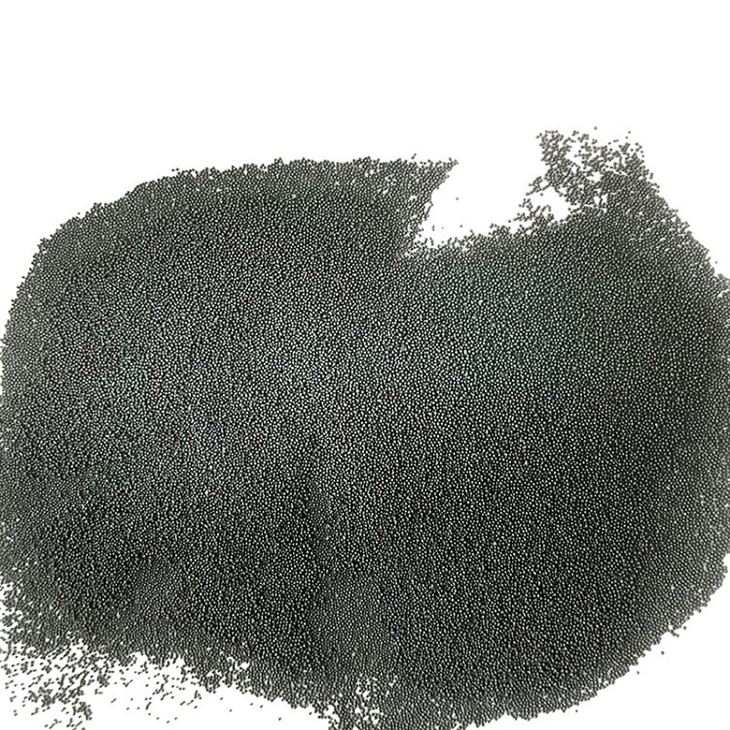
Alloy steel shot is a widely used abrasive material in various industries, known for its durability, hardness, and excellent performance in surface treatment applications. One of the key properties that determine its effectiveness in many processes is thermal conductivity. In this blog post, I'll delve into the thermal conductivity of alloy steel shot, sharing insights based on my experience as a supplier of high - quality alloy steel shot.
Understanding Thermal Conductivity
Thermal conductivity is a measure of a material's ability to conduct heat. It is defined as the quantity of heat that passes through a unit area of a material in a unit time under a unit temperature gradient. In simpler terms, it tells us how quickly heat can move through a substance. The SI unit of thermal conductivity is watts per meter - kelvin (W/(m·K)).
For alloy steel shot, thermal conductivity plays a crucial role in several applications. In processes such as heat treatment, where the shot is used to peen or clean metal surfaces at elevated temperatures, understanding its thermal conductivity helps in optimizing the process. It also affects the cooling rate of the shot after it has been heated during operation, which can influence its mechanical properties and lifespan.
Factors Affecting the Thermal Conductivity of Alloy Steel Shot
The thermal conductivity of alloy steel shot is influenced by several factors, including its chemical composition, microstructure, and temperature.
Chemical Composition
Alloy steel shot is made by adding various alloying elements to carbon steel. These elements, such as chromium, nickel, manganese, and molybdenum, can significantly affect the thermal conductivity of the shot. For example, chromium can increase the hardness and corrosion resistance of the alloy steel shot, but it may also reduce its thermal conductivity. On the other hand, some elements may enhance the thermal conductivity under certain conditions. The exact impact of each element depends on its concentration and interaction with other elements in the alloy.
Microstructure
The microstructure of alloy steel shot, which includes the grain size, phase distribution, and presence of defects, also has a profound effect on its thermal conductivity. A fine - grained microstructure generally leads to lower thermal conductivity compared to a coarse - grained one. This is because grain boundaries act as barriers to the flow of heat, scattering phonons (the primary carriers of heat in solids) and reducing the overall heat transfer efficiency.
Temperature
Temperature is another important factor that affects the thermal conductivity of alloy steel shot. In general, the thermal conductivity of metals decreases with increasing temperature. As the temperature rises, the lattice vibrations in the metal become more intense, leading to more scattering of phonons and a reduction in the mean free path of heat carriers.
Measuring the Thermal Conductivity of Alloy Steel Shot
Measuring the thermal conductivity of alloy steel shot accurately can be challenging due to its small size and irregular shape. However, several techniques can be used to estimate this property.
One common method is the transient plane source (TPS) method. In this technique, a thin sensor is placed between two samples of the alloy steel shot. The sensor acts as both a heat source and a temperature sensor. By applying a short pulse of heat to the sensor and measuring the temperature response over time, the thermal conductivity of the shot can be calculated.
Another approach is the laser flash method. In this method, a short laser pulse is used to heat one side of a compacted sample of alloy steel shot, and the temperature rise on the opposite side is measured as a function of time. From this data, the thermal diffusivity of the shot can be determined, and then, using the density and specific heat capacity of the material, the thermal conductivity can be calculated.

Importance of Thermal Conductivity in Applications
The thermal conductivity of alloy steel shot is of great importance in many industrial applications.
Surface Treatment
In surface treatment processes such as shot peening and abrasive blasting, the shot is often exposed to high temperatures. For example, in shot peening, the repeated impact of the shot on the metal surface can generate a significant amount of heat. A shot with appropriate thermal conductivity can help in dissipating this heat quickly, preventing overheating and potential damage to the shot and the workpiece. It also ensures consistent performance during the treatment process.
Heat Treatment
In heat treatment applications, the thermal conductivity of the alloy steel shot affects the heating and cooling rates of the treated parts. A shot with high thermal conductivity can transfer heat more efficiently, allowing for faster and more uniform heat treatment. This can result in better - controlled mechanical properties of the treated components.
Our Offerings as an Alloy Steel Shot Supplier
As a leading supplier of alloy steel shot, we offer a wide range of products to meet the diverse needs of our customers. Our Spherical Steel Shot is known for its high quality and consistent performance. It has a well - controlled chemical composition and microstructure, which ensures optimal thermal conductivity for various applications.
Our Abrasive Steel Shot S330 is specifically designed for abrasive blasting and shot peening processes. It has excellent hardness and toughness, combined with appropriate thermal conductivity to withstand the high - energy impacts and heat generated during these operations.
We also provide Pretreatment Steel Shot that is suitable for surface preparation before painting, coating, or other finishing operations. This shot has the right balance of properties, including thermal conductivity, to ensure effective and efficient surface cleaning.
Contact Us for Your Alloy Steel Shot Needs
If you are in the market for high - quality alloy steel shot, we are here to help. Our team of experts can provide you with detailed information about the thermal conductivity and other properties of our products, and assist you in selecting the most suitable shot for your specific application. Whether you are looking for a large - scale supply for an industrial project or a small quantity for a specialized job, we can meet your requirements. Contact us today to start a conversation about your alloy steel shot needs and explore the possibilities of working together.
References
- Touloukian, Y. S., & Ho, C. Y. (Eds.). (1970). Thermophysical Properties of Matter - The TPRC Data Series. IFI/Plenum.
- Carslaw, H. S., & Jaeger, J. C. (1959). Conduction of Heat in Solids. Oxford University Press.
- Ziman, J. M. (1960). Electrons and Phonons: The Theory of Transport Phenomena in Solids. Oxford University Press.


