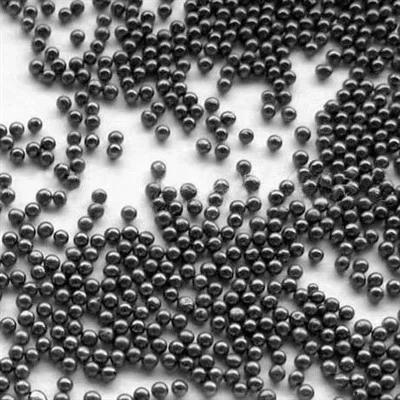
What is Spherical Steel Shot?
Spherical Steel Shot is a metallic abrasive manufactured by atomizing molten high-carbon or alloy steel into droplets using centrifugal force or air, which then cool and solidify into a perfectly spherical shape. This near-perfect spherical geometry is its defining feature, distinguishing it from other angular abrasives (like steel grit) and granting it unique performance benefits.
Core Properties & Advantages:
Excellent Flowability
The spherical structure ensures smooth flow through blast equipment, enabling consistent, even treatment of surfaces without dead zones.
High Durability & Low Consumption
The dense internal structure, free of sharp edges and weak points, makes it highly resistant to wear. It withstands repeated impact, offers an extremely long service life, and provides high cost-effectiveness.
Creates Smoother Surface Profile
Unlike sharp grit, spherical shot cleans by peening rather than cutting, producing a smoother, more uniform surface profile (anchor pattern), ideal for pre-paint preparation.
Low Dust & Low Equipment Wear
High resistance to breakdown minimizes dust generation, improving the work environment and reducing wear on blast equipment, lowering maintenance costs.
Manufacturing Process
Melting: High-quality scrap steel and alloys are precisely melted in an electric arc furnace.
Granulation: The molten steel is atomized into fine droplets via a centrifugal wheel or air. Surface tension forms them into perfect spheres.
Quenching: The droplets cool and harden (often in water), forming a hard but brittle martensitic structure.
Tempering: Heat treatment (tempering) adjusts the hardness and toughness to achieve the desired mechanical properties (e.g., HRC 40-65).
Screening: The cooled shot is classified through multi-deck screens to precise size grades (e.g., S70, S110, S330 per SAE standards).
Primary Application Areas


How to Choose the Right Spherical Steel Shot?
Substrate Material:
Harder substrates (e.g., cast steel) require harder shot (HRC 50-63); softer materials (e.g., aluminum) need softer shot (HRC 30-36).
Desired Surface Finish:
Choose spherical shot for smooth finishing/peening; angular grit or a mix may be better for rough profiles needed for adhesion.
Size (Grit):
Common SAE sizes include S110, S170, S230, S330. Small sizes for fine work, large sizes for heavy-duty cleaning.
Equipment Type:
Consult your blast machine manufacturer's recommendations for size and hardness.
Frequently Asked Questions
Q: What is the difference between Spherical Steel Shot and Steel Grit?
+
-
A: The shape is the key difference. Shot is spherical, offers long life, and creates a smoother finish. Grit is angular, cuts aggressively, creates a rougher surface for coating adhesion, but wears faster.
Q: How is the hardness of steel shot expressed and chosen?
+
-
A: It is typically expressed in Rockwell Hardness (HRC). Classifications like H (Hard), S (Soft - for minimal part deformation), and C (Cutting - sometimes used for grit) are common. Shot for peening is typically H hardness (HRC 55-65).
Q: What is the standard for steel shot size?
+
-
A: The most common standard is SAE J444, denoted by an "S" followed by a number (e.g., S170). The number approximates the particle's diameter in tenths of a thousandth of an inch (0.0001"). For example, S170 is ~0.017 inches. A higher number means a smaller particle.
Certifications
Create a comprehensive solution for efficient human theft manag


Related product recommendations

Steel Shot Abrasive is a kind of spherical metal particles, they are usually made of carbon steel and made into a regular spherical shape through a specific production process, these particles have consistent size and hardness to ensure stable and efficient cleaning and treatment during shot blasting and surface treatment.

Counterweight steel sand is a precision product made of high-quality steel. It is a special sand used to balance weight. It has high density and uniform particle size. It is widely used in medical, industrial, construction and other fields. Its shape and density Can be customized to meet specific requirements of the application.

Industrial steel shot is a method commonly used in the surface treatment process, through high-speed spraying of steel shot to impact the abrasive on the surface of the workpiece, so as to achieve the effects of polishing, deburring, and deoxidizing layer.

Cast Steel Shot is a steel shot made through a special casting process, during the casting process, molten steel is injected into a special mold to form particles with consistent shape and size, so they are more uniform and smooth than ordinary steel shots Regular, mainly used for surface treatment in industrial fields such as abrasives, tempering, rust removal, and cleaning.

The diameter of S280 Steel shot is about 0.8mm. It has a high density and hardness and can be used for grinding, cleaning and strengthening metal surfaces, as well as for sandblasting and rust removal.

S110 steel shot is a high-strength steel shot. It is a steel shot with a specific specification. Its diameter is 0.3mm. It has good wear resistance and corrosion resistance. It is widely used in shot blasting, sandblasting, surface processing, etc. field.

High carbon steel shot is a hard metal material that is smelted at a high temperature and then cooled and solidified into spherical particles. It has high hardness, high wear resistance, high elasticity and stability, and is widely used in manufacturing, construction and mining.
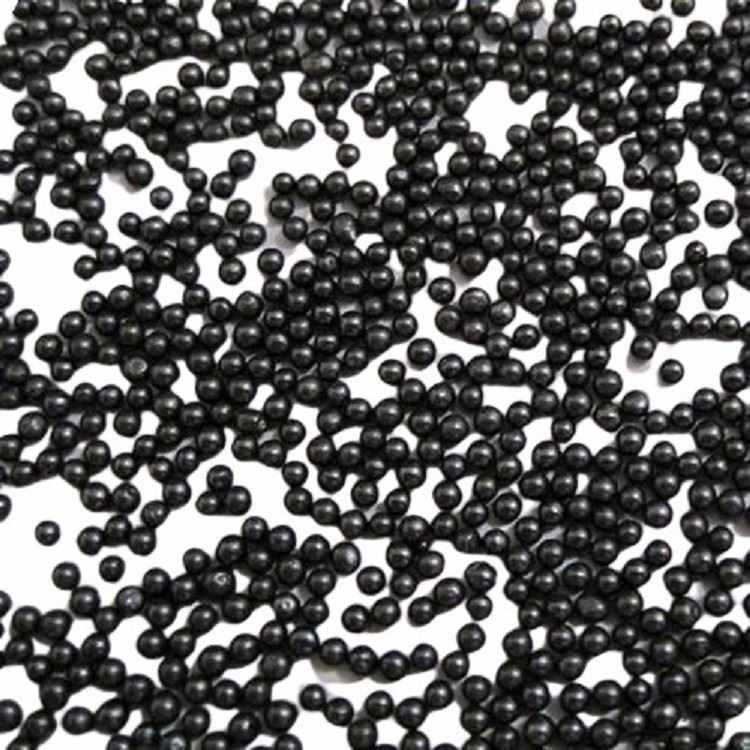
Low carbon steel shot is made of low carbon steel material, which has relatively low hardness and strength, good toughness and plasticity, and is widely used in the fields of steel shot blasting, padding and cleaning.

Intensifide grinding pill is a small spherical object used for grinding, grinding and polishing. Its materials include glass, steel, ceramics, plastics, etc. It is widely used in industrial manufacturing and medical equipment and other fields.
Why Choose Us
Quality assurance
The company has a complete quality inspection procedure and modern inspection and control equipment to ensure that the quality indicators of the products meet national standards and exceed the standards of the american motorcycle engineering association.
Our services
Choose shengxiang photosynthetic metal abrasives, you can get the following services: The most perfect polishing shot quality, the best sandblasting effect, the highest production efficiency and the lowest production cost.
Our factory
Binbo expressway is 10 kilometers away, the factory area is 9,800 square meters, and there are 110 production and professional technicians of various types.
Advanced technology
Our factory has advanced production technology and adopts modern measurement and control methods. The product indicators meet or exceed the national gb6484-86 (cast steel shot) and gb6485-86 (cast steel sand) standards. The product has uniform particle size, high quality and low price, moderate hardness, fine structure and high strength.
Types of Spherical Steel Shot
Spherical steel shot
This is the most common type of steel shot. It is perfectly spherical, providing uniform impact and coverage when used in applications like abrasive blasting and shot peening.
Cut wire shot
Cut wire shot is made by cutting steel wire into short lengths and then rounding the edges to create small, irregularly shaped pellets. It is often used for shot peening and surface preparation. Its irregular shape can create more intense surface compressive stresses compared to a spherical shot.
Conditioned steel shot
Conditioned steel shot undergoes a conditioning process that includes heat treatment to improve its hardness and durability. This type of shot is used in applications where consistent hardness and long-lasting abrasiveness are critical.
Stainless steel shot
While not strictly "steel," stainless steel shot is used for similar purposes as steel shot, but it offers corrosion resistance. It's often used in applications where rust contamination is a concern, such as in the food industry and some specific blasting applications.
High carbon steel shot
High carbon steel shot is known for its high hardness and durability. It's used in applications where aggressive abrasion is required, such as in shot-blasting hardened steel surfaces.
Low carbon steel shot
Low carbon steel shot is softer than high carbon steel shot. It is often used for less aggressive applications, like shot peening, where the objective is to strengthen the material rather than remove surface contaminants.
Cast steel shot
Cast steel shot is made by melting steel and pouring it into molds to create shot pellets. It is known for its hardness and uniformity, making it suitable for a wide range of applications, including shot blasting and shot peening.
Chilled iron shot
Chilled iron shot is made from cast iron that has been heat-treated to improve its hardness and wear resistance. It's used in applications requiring intense abrasion, such as cleaning tough surfaces and preparing them for coatings.
Zinc-plated steel shot
Zinc-plated steel shot is coated with a layer of zinc, providing some corrosion resistance. This type is used in applications where rust contamination must be minimized.
Cleaning of metal surface
The foremost applications of spherical steel shots help in taking off the indefinite particles from the surface of the metals. It is mostly used in automotive sectors regarding cylinder heads, blocks of motor, etc.
Preparation of surface
This is the next procedure of blasting in addition to cleaning and physical changes on the metal surface. This process includes cleaning of metal surface covered with paint coating, rust, and dirt to modify the metal surface with roughness to apply coating and paint.
Cutting of stones
Spherical steel shots are also used in slashing the hard and large rigid stones by cutting the huge rocks into small slices. It is mostly used in the construction and mining industries.
Shot peening
As the spherical steel shots are highly resistant in nature, it is applied in the shot peening process through a repetitive striking of hard spherical steel shots on the metal which made it misshaped and also enhances the longevity of the metal.
Debarring of metal
It is used to apply with sand blasting machines in removal of tiny unwanted particles from the surface before going through the next procedure. Spherical steel shots ranging from 0.18 mm to 2.80 mm are used in the debarring process.
Material of Spherical Steel Shot
304
The all-rounder, offering good corrosion resistance and affordability.
410
Enhanced resistance to chlorides and other aggressive chemicals, ideal for harsh environments.
430
Similar to 410 but with slightly higher manganese content, improving machinability.
How to Maintain Spherical Steel Shot
Storage
Spherical steel shot should be stored in a clean, dry, and well-ventilated area to prevent moisture buildup and rusting. It is recommended to store spherical steel shot in a sealed container or drum to protect it from contamination and foreign particles.
If possible, store spherical steel shot in a climate-controlled environment to maintain stable temperatures and reduce the risk of corrosion. Avoid storing spherical steel shot near sources of moisture, chemicals, or other abrasive materials that could cause damage to the shot.
Handling
When handling spherical steel shot, wear appropriate personal protective equipment, such as gloves and eye protection, to protect yourself from the sharp edges and potential hazards associated with abrasive media. Use caution when handling spherical steel shot to prevent injuries and maintain a safe working environment.
Always use proper equipment, such as blast cabinets, tumblers, or shot blasting machines, when using spherical steel shot for cleaning or finishing applications. Avoid using damaged or worn-out equipment that could compromise the integrity of the shot and result in poor performance.
During use, monitor the condition of the spherical steel shot and replace it as needed to ensure consistent results. Inspect the shot regularly for signs of wear, such as flat or irregularly shaped particles, and discard any damaged or contaminated shot to prevent damage to your equipment and workpieces.
Cleaning and maintenance
After use, clean spherical steel shotthoroughly to remove any debris, contaminants, or buildup that could affect its performance. Use a sieve or magnetic separator to separate reusable shot from debris and fine particles for proper storage and reuse.
Regularly inspect and maintain your equipment, such as blast cabinets or tumblers, to ensure they are in good working condition and do not contribute to the degradation of the spherical steel shot. Clean and lubricate moving parts, check for wear and damage, and replace any components as needed to maintain optimal performance.
By following these tips on how to properly store and handle spherical steel shot, you can ensure its longevity and maintain its quality for effective cleaning, deburring, and peening applications. Proper storage, handling, and maintenance are essential for preserving the integrity and performance of spherical steel shot, allowing you to achieve the best results in your abrasive media processes.
Manufacturing Process of Spherical Steel Shots
Melting stage
The first stage of the manufacturing process is melting. High-quality steel scrap is loaded into a furnace and melted to a liquid state. The steel is heated to temperatures above 1,750 degrees celsius to ensure that impurities are eliminated, and a consistent alloy is produced.
For more information about spherical steel shot manufacturer visit our website.
Atomizing stage
The molten steel is then poured through a nozzle and atomized into small droplets. This is accomplished using high-pressure water jets or compressed air, which break up the molten steel into droplets ranging in size from a few microns to a few millimeters.
Heat treatment stage
The third stage of the manufacturing process is heat treatment. The steel droplets are then hardened and tempered through a controlled heat treatment process. This process involves heating the steel droplets to a specific temperature and holding them at that temperature for a specific duration. The steel droplets are then rapidly cooled to harden them.
Screening stage
The final stage of the manufacturing process is screening. The hardened steel droplets are screened to separate them into different sizes. The spherical steel shots in india are then classified into different size ranges, packaged, and sent to the market.
Production Method of Spherical Steel Shot
Rolling
Pouring the liquid metal into a rotating cylinder, the liquid metal will splash and fall into the water and then form the shots. This method has been eliminated for its poor productivity.
Air blowing
Take advantage of speedy jet medium-the noble gases or the compressed air to blow the liquid steel and then the liquid steel fall into water thus form the shots. The cost is not proportional to the product output and the qualification rate of steel shot is less than 50%, thus this method is also close to be eliminated.
Water jetting
Make use of water to jet and hit the liquid metal to scattered into the water and then cooling, solidifying and finally form the steel shot. Shortcomings of this method are easily to form hollow shots or shots with irregular shapes. The speed and stress of water jet can be controlled by changing the shape of nozzle and also can greatly improve the production.
Centrifugation
Pouring the liquid steel into a special rational disc with high speed, under the centrifugal force, the liquid steel will remove the disc and fall into water and form the steel shot. The centrifugation can get higher productivity and greatly reduce the proportion of hollow shots.
Rotational centrifugation
Rotational centrifugation is a combination of water jet and centrifugation,. Put the molten steel into special equipment and rotate it into metal membrane. Under the centrifugation force and surface tension, the metal will form little droplets and drop vertically into water, finally shaped into steel shots. The steel shots made of this method generally have better quality and mechanical properties.
Get from alloy steel
This method is getting steel shots from alloy steel and its leftover material. Firstly, give quenching treatment to metal material, and then using high-intensity machine to crush them, finally using the tempering to eliminate its interior stress. Steel shots made of this method are not only own the casting performance of alloy steel but also have denser structure and better mechanical properties. This method can reduce the material loss and produce better quality products, therefore will become a major development trend of producing steel shots.
Our Factory
Our company was founded in 2001, it's located in Zibo Luzhong Porcelain Capital, south of Jinan-Qingdao Expressway. The Binbo expressway is 10 kilometers each, the factory area is 9,800 square meters, and there are 110 various production and professional technical personnel. In accordance with the modern enterprise operation and management mode, the company adheres to the quality policy of zero defect, and has formed steel grit, steel shot, stainless steel. Our company has the perfect quality examine program and modern test-con-trol equipment guarateed that various quality index of the product reached the country standard, and even to go beyond the standard of american moto engineer society.

FAQ
Hot Tags: Spherical Steel Shot, China Spherical Steel Shot manufacturers, suppliers, factory, steel shot for forging, steel shot for testing, Low Carbon steel shot S780, steel shot for market forecast, steel shot for market segment analysis, steel shot for polishing