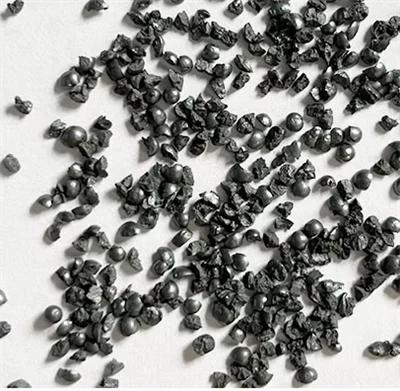
Hey there! As a supplier of Bearing Steel Grit, I've seen firsthand the importance of recycling in our industry. Not only does it help the environment, but it also makes good business sense. In this blog post, I'm gonna share some of the recycling methods for used Bearing Steel Grit that I've come across.
First off, let's talk about what Bearing Steel Grit is. Bearing Steel Grit is a high - quality abrasive used in various industries like metalworking, surface preparation, and shot peening. You can find more details about it on our website Bearing Steel Grit. It's known for its hardness, durability, and excellent performance. But once it's used, what can we do with it?
1. Magnetic Separation
One of the most common recycling methods for used Bearing Steel Grit is magnetic separation. Since Bearing Steel Grit is magnetic, we can use powerful magnets to separate it from other non - magnetic materials in the waste stream. This is a relatively simple and cost - effective process.
The way it works is that the used grit mixture is passed over a magnetic conveyor or through a magnetic drum. The magnetic particles, which are our Bearing Steel Grit, stick to the magnet, while non - magnetic debris like dust, rust, and other contaminants fall away. After that, the collected grit can be further processed to remove any remaining impurities.
This method is great because it can quickly and efficiently recover a large amount of the used grit. It's also widely used in recycling plants that deal with a variety of metal waste, not just Bearing Steel Grit.
2. Screening and Classification
After magnetic separation, screening and classification are often carried out. Screening involves passing the recovered grit through a series of sieves with different mesh sizes. This helps to separate the grit into different particle sizes.
Why is this important? Well, in many applications, the size of the grit matters a lot. For example, in some surface preparation jobs, a specific grit size is required to achieve the desired surface finish. By classifying the recycled grit into different sizes, we can make it suitable for different uses again.
We can also remove any oversized or undersized particles during this process. Oversized particles may not work well in certain equipment, while undersized particles might not have enough abrasive power. So, screening and classification ensure that the recycled grit meets the quality standards for reuse.
3. Cleaning and Conditioning
Once the grit has been separated and classified, it usually needs to be cleaned and conditioned. Cleaning is done to remove any remaining dirt, oil, or other contaminants on the surface of the grit. This can be achieved through various methods, such as washing with water and detergents or using a dry - cleaning process.
Conditioning, on the other hand, is about restoring the physical properties of the grit. During use, the grit may become dull or damaged. Conditioning can involve processes like heat treatment or mechanical tumbling. Heat treatment can improve the hardness and toughness of the grit, while mechanical tumbling can reshape the particles and make them more angular, which enhances their abrasive performance.
4. Comparison with Other Steel Grits in Recycling
It's interesting to compare the recycling of Bearing Steel Grit with other types of steel grits, like GL 50 Steel Grit and Carbon Steel Grit.
GL 50 Steel Grit is also a popular abrasive, and its recycling process is somewhat similar to that of Bearing Steel Grit. However, GL 50 may have different physical and chemical properties, which can affect the efficiency of the recycling methods. For example, it may require a different heat - treatment temperature during conditioning.
Carbon Steel Grit, on the other hand, has a higher carbon content compared to Bearing Steel Grit. This can make it more brittle and may require different cleaning and conditioning steps. The magnetic properties of Carbon Steel Grit may also vary, which can influence the magnetic separation process.
Benefits of Recycling Used Bearing Steel Grit
Recycling used Bearing Steel Grit has several benefits. Firstly, it's environmentally friendly. By recycling, we reduce the amount of waste going to landfills and also conserve natural resources. Producing new steel grit from raw materials requires a lot of energy and resources, so recycling helps to cut down on that.
Secondly, it's cost - effective for both suppliers like me and our customers. Recycling the grit is often cheaper than producing new grit from scratch. This cost - saving can be passed on to the customers, making our products more competitive in the market.
Finally, recycling helps to maintain a stable supply of high - quality abrasive. In some cases, the recycled Bearing Steel Grit can perform just as well as the new one, which means our customers can get reliable products without having to worry about shortages.
How You Can Get Involved
If you're in an industry that uses Bearing Steel Grit, you can play an important role in the recycling process. You can collect your used grit and send it back to us for recycling. We have a well - established recycling system in place to ensure that the grit is properly processed and reused.
By choosing to work with us for your Bearing Steel Grit needs, you're not only getting a high - quality product but also contributing to a more sustainable future. Whether you're a small - scale workshop or a large - scale manufacturing plant, we can provide you with the right amount and type of grit for your specific applications.
If you're interested in learning more about our Bearing Steel Grit products or want to discuss a potential purchase, feel free to reach out. We're always happy to have a chat and see how we can meet your needs. Recycling is a win - win situation, and I hope you'll join us in this effort.
References
- Industry reports on steel grit recycling
- Technical documents on the properties and applications of Bearing Steel Grit
So, that's all about the recycling methods for used Bearing Steel Grit. I hope this post has been informative for you. If you have any questions or comments, don't hesitate to share them. Looking forward to hearing from you and potentially doing business with you!