


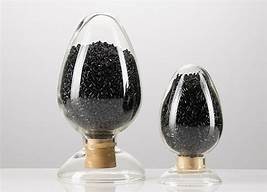



What is Alloy Steel Shot?
Alloy Steel Shot is a granular metallic abrasive manufactured by melting high-quality alloy steel ingots and using high-pressure water atomization or centrifugal crushing processes. Its chemical composition includes alloying elements such as Chromium (Cr), Manganese (Mn), and Silicon (Si), which give it higher hardness, toughness, and wear resistance compared to common cast iron shot or steel shot.
Core strengths
High Hardness & Wear Resistance
Typical hardness is adjustable between HRC 40-65, offering an extremely long service life that significantly reduces consumption costs.
Customizable Sizes
Available in various standard sizes (grits), from 0.2mm to 3.0mm, to meet different application needs.

High Recyclability
Exceptional durability allows for multiple recovery and reuse cycles, offering high economic efficiency.
Excellent Toughness
Dense internal structure makes it resistant to breakage, allowing it to withstand repeated impact. Generates less dust, making it environmentally friendlier and easier on equipment.
Alloy Steel Shot are premium-grade abrasives engineered for robust industrial applications. Manufactured from high-carbon alloy steel (C: 0.85-1.4%, Cr: 1.0-1.5%, Mo: 0.3-0.6%) through advanced quenching and tempering, these shots meet SAE J444 and ASTM A1038 standards. With tailored particle sizes and hardness, they excel in heavy-duty cleaning, peening, and surface preparation across demanding industries.
Grades & Technical Specifications:
| Grade | Particle Size Range | Hardness (HRC) | Roundness | Density (g/cm³) | Cycle Life (Times) | Typical Applications |
|---|---|---|---|---|---|---|
| S280 | 0.8MM | 40-50 | ≥98% | 7.4 | 2700-3000 | Medium steel components, automotive gears |
| S330 | 1.0mm | 40-50 | ≥98% | 7.4 | 2700-3000 | Heavy machinery, shipbuilding, pipeline rust removal |
| S390 | 1.2mm | 40-50 | ≥98% | 7.4 | 2700-3000 | Ultra-heavy equipment, steel structures, foundry deburring |
| SAMPLES | Alloy Steel Shot | CHEMICAL ELEMENTS | C\Si\Mn\S\P | ||
|---|---|---|---|---|---|
| ORDER | % RESULT PERCENT | ||||
| C | Si | Mn | S | P | |
| 0.85-0.12 | 0.5-1.2 | 0.6-1.2 | ≤0.03 | ≤0.03 | |
| HARDNESS | 40-50HRC | ||||
| DENSITY | 7.4g/cm³ | ||||
| METALLOGRPHICAL STRUCTURE | tempered martensite |
Manufacturing Process
Melting: High-quality scrap steel and alloying elements are melted in an electric arc furnace.
Atomization / Granulation: The molten steel is broken into fine droplets via high-pressure water jets or centrifugal force and cooled into granules.
Quenching: The granules are heated to austenitizing temperature and rapidly cooled (quenched) to obtain a high-hardness martensitic structure.
Tempering: Tempering adjusts the hardness to the desired level, relieves internal stresses, and improves toughness.
Screening: The processed steel shot is classified and screened into different size grades before packaging.
Primary Application Areas


Consider these factors when selecting:
Substrate Material: Harder substrates require harder shot.
Desired Surface Finish: The required surface profile (roughness) and cleanliness level.
Equipment Type: The type of blast machine or wheel determines suitable abrasive specifications.
Cost Efficiency: While the initial investment is higher, its long life and low consumption often result in a lower overall total cost.

Frequently Asked Questions
Q: What is the difference between Alloy Steel Shot and Cast Steel Shot?
A: The main differences lie in the raw materials and toughness. Alloy steel shot is made from alloy steel, is tougher, more impact-resistant, less prone to breakdown, and offers a longer lifespan. Cast steel shot is made from high-carbon steel and is comparatively more brittle.
Q: How is the hardness of alloy steel shot expressed?
A: It is typically expressed using Rockwell Hardness (HRC scale), commonly ranging from HRC 40 to 65.
Q: Can it be recycled and reused?
A: Yes, one of the primary advantages of alloy steel shot is its high recyclability. Intact particles can be separated and reused multiple times through the equipment's integrated separation system.
Certifications
Cer tificate name
Certificate name

Certificate name

Certificate name

Certif icate name
Certificate name

Hot Tags: Alloy Steel Shot, China Alloy Steel Shot manufacturers, suppliers, factory, Steel Shot Abrasive S390, S110 Steel Shot, Steel wire pellet cutting 1 2mm, steel shot for certification, steel shot for energy saving, Counterweight steel shot 1 7mm


