



Hey there! As a supplier of G18 Steel Grit, I often get asked about various aspects of this product, and one question that pops up quite a bit is: What is the static charge of G18 Steel Grit? Let's dig into this topic and clear up any confusion.
First off, let's understand what static charge is. Static charge, or static electricity, is an imbalance of electric charges within or on the surface of a material. It occurs when there is a transfer of electrons between two materials that come into contact and then separate. This can happen in many situations, like when you rub a balloon on your hair and it sticks to the wall.
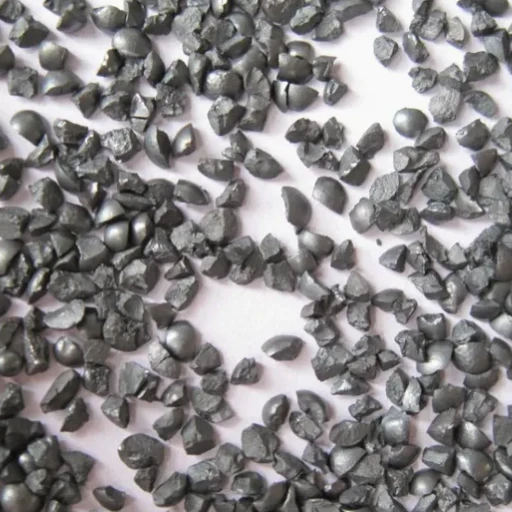
Now, when it comes to G18 Steel Grit, static charge can be a bit of a concern in certain applications. G18 Steel Grit is a type of abrasive material commonly used in Steel Grit Blasting. In blasting operations, the grit is propelled at high speeds onto a surface to clean, prepare, or finish it. During this process, the steel grit particles can rub against each other, the blasting equipment, and the surface being blasted. This friction can lead to the generation of static charge.
The static charge on G18 Steel Grit can have several effects. One of the main issues is that it can cause the grit particles to stick together or to the surfaces they come into contact with. This can lead to uneven blasting results, as the clumped particles may not distribute evenly across the surface. It can also cause problems with the flow of the grit through the blasting equipment, potentially clogging the nozzles or hoses.
Another concern is the potential for static charge to cause electrostatic discharge (ESD). ESD can be a safety hazard, especially in environments where there are flammable or explosive materials. A spark from an electrostatic discharge could ignite these materials, leading to a fire or explosion.
So, how can we measure the static charge of G18 Steel Grit? There are a few methods that can be used. One common method is to use an electrostatic field meter. This device measures the strength of the electrostatic field around the steel grit particles. By taking readings at different points during the blasting process, we can get an idea of how much static charge is being generated.
Another way to assess the static charge is to look at the behavior of the steel grit particles. If they are clumping together or sticking to surfaces, it's a good indication that there is a significant static charge. We can also conduct tests to see if the grit is causing any ESD events.
To reduce the static charge on G18 Steel Grit, there are several strategies that can be employed. One approach is to use an anti-static agent. These agents can be added to the steel grit during the manufacturing process or sprayed onto the grit before it is used in the blasting operation. Anti-static agents work by either neutralizing the static charge or by preventing it from building up in the first place.
Another way to reduce static charge is to control the humidity in the blasting environment. Higher humidity levels can help to dissipate static charge, as the moisture in the air acts as a conductor. By keeping the humidity at an optimal level, we can minimize the amount of static charge generated during the blasting process.
Proper grounding of the blasting equipment is also crucial. Grounding provides a path for the static charge to flow safely to the ground, preventing it from building up on the steel grit or the equipment. All parts of the blasting system, including the blasting cabinet, hoses, and nozzles, should be properly grounded.
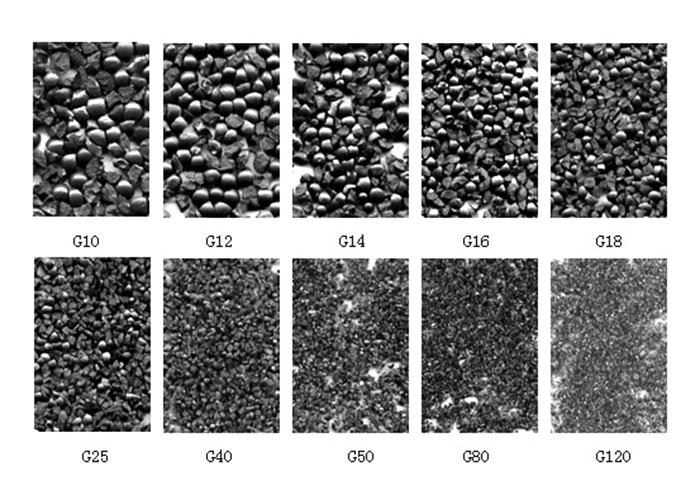
Now, you might be wondering how the static charge of G18 Steel Grit compares to other types of steel grit. Well, different grades of steel grit, such as GP 120 Steel Grit and GL 12 Steel Grit, may have different levels of static charge depending on their size, shape, and composition. Generally, smaller grit particles tend to generate more static charge than larger ones, as they have a greater surface area to volume ratio and are more likely to rub against each other.
In conclusion, understanding the static charge of G18 Steel Grit is important for ensuring the quality and safety of blasting operations. By being aware of the factors that contribute to static charge generation and taking appropriate measures to reduce it, we can achieve better blasting results and minimize the risk of safety hazards.
If you're in the market for high-quality G18 Steel Grit or have any questions about its static charge or other properties, I'd love to hear from you. Feel free to reach out to me to discuss your specific needs and how we can work together to find the best solution for your blasting applications.
References
- ASTM International. (Year). Standard test methods for evaluating the properties of steel grit and shot. ASTM [Standard Number].
- Industrial Blasting Association. (Year). Best practices for controlling static charge in blasting operations. [Publication Name].


