



Shot peening is a cold - working process used to produce a compressive residual stress layer and modify the mechanical properties of metals. S280 steel shot, a popular choice in the shot peening industry, offers unique performance characteristics that make it a valuable asset for various applications. As a supplier of S280 steel shot, I am excited to share insights into its performance in shot peening.
Physical and Chemical Properties of S280 Steel Shot
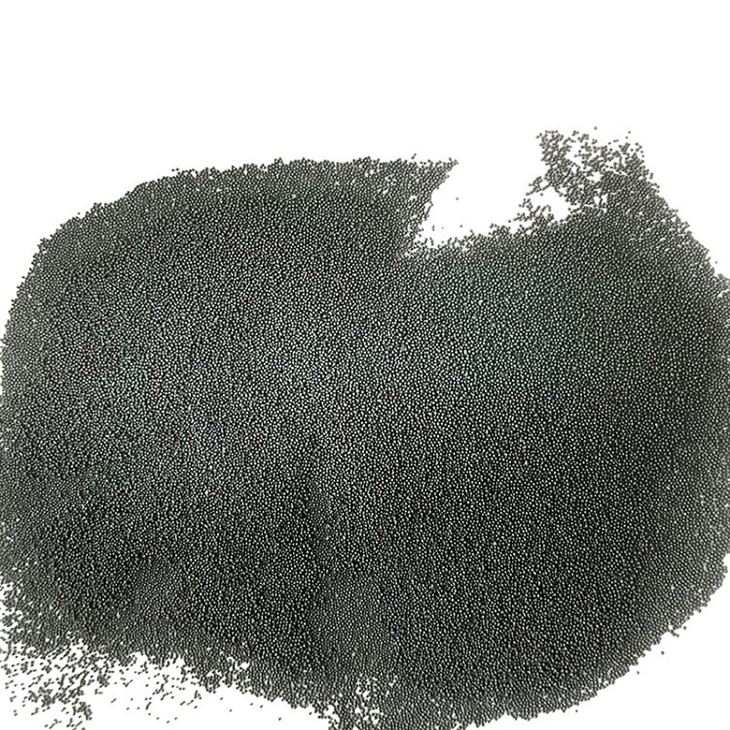
S280 steel shot is characterized by its specific size and material composition. The "S280" designation refers to the size of the shot, with an average diameter typically falling within a defined range. This size is carefully calibrated to achieve optimal results in shot peening operations.
In terms of chemical composition, S280 steel shot is mainly composed of iron, with small amounts of carbon, manganese, silicon, and other alloying elements. The carbon content is usually in the range of 0.8 - 1.2%, which contributes to the hardness of the shot. Manganese helps to improve the strength and toughness, while silicon enhances the fluidity during the manufacturing process.
The hardness of S280 steel shot is a crucial factor in its performance. It typically has a hardness in the range of 40 - 50 HRC (Rockwell Hardness C scale). This hardness level ensures that the shot can effectively impact the surface of the workpiece during shot peening, creating the desired compressive residual stress without causing excessive surface damage.
Performance in Surface Preparation
One of the primary applications of S280 steel shot in shot peening is surface preparation. Before applying coatings or performing other finishing operations, it is essential to clean and roughen the surface of the workpiece to improve adhesion. S280 steel shot is highly effective in this regard.
When used for surface preparation, S280 steel shot can remove rust, scale, and other contaminants from the metal surface. The impact of the shot on the surface dislodges these unwanted materials, leaving a clean and uniform surface. Moreover, the shot creates a certain degree of surface roughness, which provides a better mechanical bond for subsequent coatings. This is especially important in industries such as automotive, aerospace, and marine, where the durability of coatings is crucial for protecting the underlying metal from corrosion and wear.
The use of S280 steel shot in surface preparation also helps to improve the fatigue life of the workpiece. By creating a compressive residual stress layer on the surface, it counteracts the tensile stresses that can lead to crack initiation and propagation. This is particularly beneficial for components that are subjected to cyclic loading, such as gears, springs, and shafts.
Performance in Stress Relieving
Shot peening with S280 steel shot is an effective method for stress relieving. During the manufacturing process, such as machining, welding, or heat treatment, residual stresses can build up in the workpiece. These residual stresses can cause distortion, cracking, and reduced mechanical properties.
When S280 steel shot impacts the surface of the workpiece, it generates a compressive residual stress field. This compressive stress helps to balance out the existing tensile residual stresses, reducing the overall stress level in the component. As a result, the risk of distortion and cracking is significantly reduced, and the dimensional stability of the workpiece is improved.
In addition, stress relieving with S280 steel shot can enhance the fatigue resistance of the material. Compressive residual stresses prevent the formation and growth of cracks under cyclic loading, increasing the service life of the component. This is of great importance in high - performance applications where reliability and durability are critical.
Performance in Fatigue Resistance Improvement
One of the most significant advantages of using S280 steel shot in shot peening is its ability to improve the fatigue resistance of metals. Fatigue failure is a common problem in many engineering components, especially those subjected to repeated loading.
When S280 steel shot strikes the surface of the workpiece, it induces plastic deformation in the surface layer. This plastic deformation results in the formation of a compressive residual stress field, which acts as a barrier to crack initiation and propagation. The compressive stress counteracts the tensile stresses generated during cyclic loading, reducing the effective stress amplitude at the surface.
Numerous studies have shown that shot peening with S280 steel shot can significantly increase the fatigue life of components. For example, in automotive engine components such as connecting rods and crankshafts, shot peening with S280 steel shot can improve the fatigue strength by up to 50%. This improvement in fatigue resistance not only enhances the reliability of the components but also reduces the maintenance and replacement costs over the service life of the equipment.
Comparison with Other Shot Types
While S280 steel shot offers excellent performance in shot peening, it is also important to compare it with other shot types to understand its advantages and limitations.
Pretreatment Steel Shot
Pretreatment Steel Shot is another type of shot commonly used in surface preparation. Compared to S280 steel shot, pretreatment steel shot may have different size distributions and hardness levels. Pretreatment steel shot is often designed for general - purpose surface cleaning and roughening. However, S280 steel shot, with its specific size and hardness, is more suitable for applications where precise control of the surface finish and compressive stress is required.
Abrasive Stainless Steel Shot
Abrasive Stainless Steel Shot is known for its corrosion resistance. It is often used in applications where the workpiece needs to be protected from corrosion during the shot peening process. However, stainless steel shot is generally more expensive than S280 steel shot. In terms of performance in creating compressive residual stress, S280 steel shot can be more cost - effective for many common applications.
Steel Cut Wire Shot
Steel Cut Wire Shot has a different shape compared to S280 steel shot. Steel cut wire shot is cylindrical, while S280 steel shot is spherical. The spherical shape of S280 steel shot provides a more uniform impact on the surface, resulting in a more consistent surface finish and compressive stress distribution. Steel cut wire shot may be more suitable for applications where a higher cutting action is required, but S280 steel shot is better for achieving a smooth and evenly stressed surface.
Factors Affecting the Performance of S280 Steel Shot
Several factors can affect the performance of S280 steel shot in shot peening.
Shot Velocity
The velocity at which the S280 steel shot impacts the workpiece is a critical factor. Higher shot velocities generally result in deeper penetration of the compressive stress layer and greater surface hardening. However, excessive shot velocity can also cause surface damage, such as pitting or cracking. Therefore, it is necessary to optimize the shot velocity based on the specific requirements of the application.
Shot Flow Rate
The flow rate of S280 steel shot also affects the shot peening process. A higher flow rate means more shot particles impact the surface per unit time, which can increase the coverage and intensity of the shot peening. However, an overly high flow rate may lead to an uneven surface finish and waste of shot material.
Workpiece Material and Geometry
The material and geometry of the workpiece can significantly influence the performance of S280 steel shot. Different materials have different hardness and ductility, which affect the response to shot peening. For example, harder materials may require a higher - velocity shot to achieve the desired compressive stress. The geometry of the workpiece, such as its shape, size, and surface curvature, also affects the distribution of the shot and the resulting compressive stress field.

Conclusion
In conclusion, S280 steel shot offers excellent performance in shot peening, including surface preparation, stress relieving, and fatigue resistance improvement. Its specific physical and chemical properties, such as size, hardness, and spherical shape, make it a versatile and effective choice for various applications in different industries.
Compared to other shot types, S280 steel shot has its unique advantages, such as uniform impact, consistent surface finish, and cost - effectiveness in many cases. However, the performance of S280 steel shot is also affected by factors such as shot velocity, flow rate, and workpiece material and geometry.
If you are looking for a reliable and high - performance solution for your shot peening needs, S280 steel shot is definitely worth considering. Whether you are in the automotive, aerospace, or manufacturing industry, our S280 steel shot can help you achieve better surface quality, improved mechanical properties, and longer service life of your components. Feel free to contact us to discuss your specific requirements and explore how our S280 steel shot can benefit your operations.
References
- Almen, J. O., & Black, A. J. (1963). Peening of metals. New York: Macmillan.
- Shot Peening Handbook, edited by the Society of Automotive Engineers (SAE).
- Surface Engineering for Corrosion and Wear Protection, by R. C. C. Wong and A. Matthews.


