



Hey there! As a supplier of Micro Steel Grit, I often get asked about the electrostatic property of this nifty product. So, let's dig deep into what exactly the electrostatic property of Micro Steel Grit is and why it matters.
First off, let's understand what electrostatic property means in general. Electrostatic refers to stationary electric charges or fields as opposed to electric currents. In the context of Micro Steel Grit, electrostatic properties can have a significant impact on its performance and application.
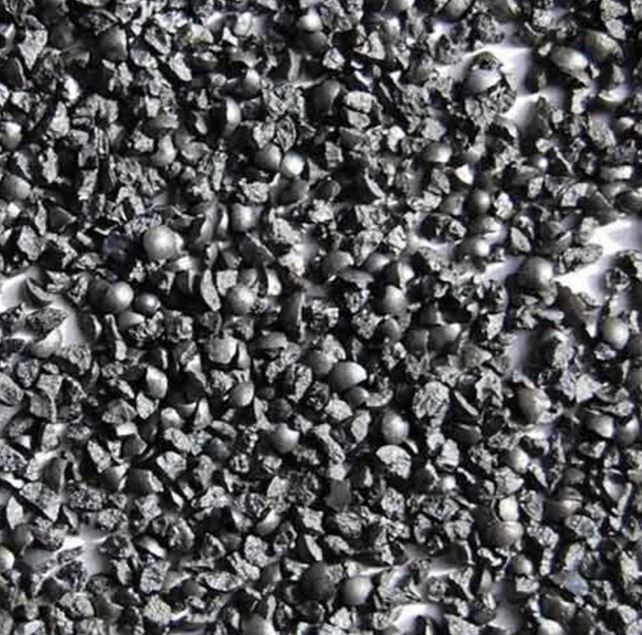
Micro Steel Grit is made up of tiny steel particles. These particles can develop an electrostatic charge under certain conditions. For instance, when the grit is being produced, the mechanical processes like grinding, sieving, and handling can cause friction between the steel particles and the equipment or other materials. This friction can lead to the transfer of electrons, resulting in some particles gaining a positive charge while others gain a negative charge.
One of the key effects of the electrostatic property of Micro Steel Grit is its influence on the flowability of the grit. When the particles have an electrostatic charge, they can attract or repel each other. If the charges are of the same sign, the particles will repel, which can lead to a more dispersed and free - flowing grit. On the other hand, if the charges are opposite, the particles will attract, causing them to clump together. This clumping can be a problem in applications where a consistent and even distribution of the grit is required.
In sandblasting applications, which is one of the most common uses of Micro Steel Grit, the electrostatic property can affect the efficiency of the process. A well - flowing grit will ensure a more uniform blasting pattern, which is crucial for achieving a consistent surface finish on the workpiece. If the grit clumps due to electrostatic attraction, it can lead to uneven blasting, with some areas of the workpiece getting more abrasive action than others.
Another aspect where the electrostatic property comes into play is in the collection and recycling of the Micro Steel Grit. After the sandblasting process, the used grit needs to be collected and recycled for cost - effectiveness and environmental reasons. The electrostatic charge on the grit can affect how it adheres to the surfaces it comes into contact with, such as the walls of the blasting chamber or the collection equipment. If the grit has a strong electrostatic charge, it may stick to these surfaces, making it difficult to collect and recycle.
Now, let's talk about how we can manage the electrostatic property of Micro Steel Grit. One way is through the use of anti - static agents. These agents can be added during the production process or during the sandblasting operation. Anti - static agents work by neutralizing the electrostatic charges on the grit particles, preventing them from clumping or sticking to surfaces.
Another approach is to control the environmental conditions. Humidity, for example, can have a significant impact on the electrostatic charge of the grit. Higher humidity levels can help to dissipate the electrostatic charges, as water molecules in the air can act as conductors. So, maintaining a certain level of humidity in the blasting environment can be beneficial for managing the electrostatic property of the grit.
At our company, we offer a range of Micro Steel Grit products, including GH 18 Steel Grit, GP 14 Steel Grit, and GL 120 Steel Grit. Each of these products has been carefully formulated to have optimal electrostatic properties for different applications.
The GH 18 Steel Grit is designed for heavy - duty sandblasting applications. It has been treated to minimize electrostatic clumping, ensuring a smooth and efficient blasting process. The GP 14 Steel Grit, on the other hand, is ideal for medium - intensity applications. It has a balanced electrostatic property that allows for good flowability while still maintaining its abrasive effectiveness. The GL 120 Steel Grit is a fine - grained option, perfect for applications where a more delicate surface finish is required. We have also taken steps to manage its electrostatic property to ensure consistent performance.
If you're in the market for high - quality Micro Steel Grit, you need to consider the electrostatic property as an important factor. A grit with well - managed electrostatic properties will not only give you better results in your sandblasting or other applications but also save you time and money in the long run.

Whether you're a small - scale workshop or a large industrial facility, we can provide you with the right Micro Steel Grit product to meet your needs. Our team of experts is always on hand to answer any questions you may have about the electrostatic property or any other aspect of our products.
If you're interested in learning more about our Micro Steel Grit products or want to discuss your specific requirements, don't hesitate to reach out. We're eager to start a conversation and help you find the perfect solution for your abrasive needs. Let's work together to achieve the best results in your projects!
References:
- "Handbook of Abrasive Materials and Their Applications"
- "Surface Preparation and Coating Application"


