



Micro steel grit, a versatile abrasive material, has gained significant popularity in various industrial applications. As a leading supplier of high-quality micro steel grit, I've witnessed firsthand the transformative impact it can have on workpiece processing. One crucial aspect that often comes under scrutiny is its effect on the dimensional accuracy of workpieces. In this blog post, I'll delve into the science behind micro steel grit and explore how it influences the dimensional precision of workpieces.
Understanding Micro Steel Grit
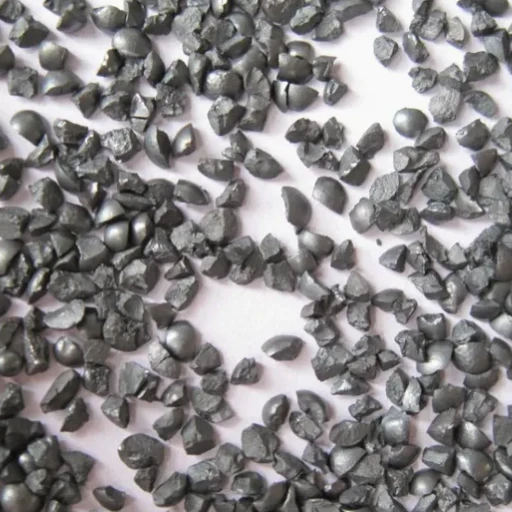
Micro steel grit is a type of abrasive media made from high-carbon steel or alloy steel. It is produced by atomizing molten steel into small, spherical droplets, which are then quenched and tempered to achieve the desired hardness and toughness. The resulting grit particles are angular in shape, with sharp edges and a high density, making them highly effective for surface preparation, cleaning, and finishing applications.
There are several types of micro steel grit available on the market, each with its own unique properties and applications. Alloy Steel Grit, for example, is formulated with additional alloying elements such as chromium, nickel, and molybdenum to enhance its hardness, wear resistance, and corrosion resistance. Bearing Steel Grit, on the other hand, is specifically designed for use in high-stress applications, such as bearing manufacturing, where dimensional accuracy and surface finish are critical.
The Role of Micro Steel Grit in Workpiece Processing
Micro steel grit is commonly used in a variety of industrial processes, including Steel Grit Blasting, shot peening, and surface finishing. In steel grit blasting, the grit particles are propelled at high speed onto the surface of the workpiece using compressed air or a centrifugal wheel. This process removes contaminants, rust, scale, and other surface imperfections, leaving behind a clean, smooth, and uniform surface.
Shot peening, on the other hand, involves bombarding the surface of the workpiece with small, spherical shot particles to induce compressive stresses in the material. This process improves the fatigue life, strength, and resistance to cracking and corrosion of the workpiece. Surface finishing with micro steel grit can also be used to achieve a specific surface texture or appearance, such as a matte or polished finish.
Impact on Dimensional Accuracy
One of the primary concerns when using micro steel grit in workpiece processing is its potential impact on dimensional accuracy. Dimensional accuracy refers to the degree to which the actual dimensions of a workpiece match the specified dimensions. Any deviation from the specified dimensions can result in a defective or non-conforming part, which can have serious consequences for the performance and functionality of the final product.
The effect of micro steel grit on dimensional accuracy depends on several factors, including the size, shape, and hardness of the grit particles, the blasting pressure and angle, the distance between the blasting nozzle and the workpiece, and the duration of the blasting process. In general, larger grit particles tend to have a greater impact on dimensional accuracy than smaller particles, as they can remove more material from the surface of the workpiece.
The shape of the grit particles also plays a role in dimensional accuracy. Angular grit particles, such as those found in micro steel grit, tend to be more aggressive and can remove material more quickly than spherical particles. However, they can also cause more surface damage and roughness, which can affect the dimensional accuracy of the workpiece.
The blasting pressure and angle are also important factors to consider. Higher blasting pressures can result in more material removal and a greater impact on dimensional accuracy, while lower pressures can be used to achieve a more controlled and precise finish. The blasting angle can also affect the distribution of the grit particles on the surface of the workpiece, which can impact the uniformity of the material removal and the dimensional accuracy of the final part.

Strategies for Maintaining Dimensional Accuracy
To minimize the impact of micro steel grit on dimensional accuracy, it is important to carefully select the appropriate grit size, shape, and hardness for the specific application. In general, smaller grit sizes are recommended for applications where dimensional accuracy is critical, as they can provide a more controlled and precise finish. Spherical grit particles can also be used to reduce surface damage and roughness, which can help to maintain dimensional accuracy.
It is also important to control the blasting parameters, such as the pressure, angle, and distance between the blasting nozzle and the workpiece. This can be achieved by using a blasting machine with adjustable settings and by following the manufacturer's recommendations for the specific grit material and application. Additionally, regular inspection and measurement of the workpiece during the blasting process can help to ensure that the dimensional accuracy is within the specified tolerances.
Conclusion
Micro steel grit is a powerful and versatile abrasive material that can have a significant impact on the dimensional accuracy of workpieces. By understanding the factors that influence dimensional accuracy and implementing appropriate strategies for maintaining it, manufacturers can ensure that their parts meet the highest standards of quality and performance.
As a supplier of high-quality micro steel grit, I am committed to providing my customers with the best possible products and services. If you have any questions or would like to learn more about how micro steel grit can benefit your specific application, please don't hesitate to contact me. I would be happy to discuss your requirements and help you find the right solution for your needs.
References
- ASTM International. (2019). Standard Specification for Steel Grit for Abrasive Blast Cleaning. ASTM A247-19.
- Metal Improvement Company. (2020). Shot Peening Handbook. 3rd Edition.
- Surface Preparation and Coating Application. (2018). Steel Structures Painting Council (SSPC) Handbook. Volume 1.


