



As a long - standing supplier of steel shot abrasive, I've been deeply involved in the industry for years. In this blog, I'll delve into the concept of the coverage rate of steel shot abrasive, a crucial metric that significantly impacts the efficiency and quality of surface treatment processes.
Understanding the Coverage Rate of Steel Shot Abrasive
The coverage rate of steel shot abrasive refers to the extent to which the surface of a workpiece is covered by the impacts of steel shots during the blasting process. It is usually expressed as a percentage. A high coverage rate means that a larger proportion of the workpiece's surface has been effectively hit by the steel shots, which is essential for achieving a uniform and high - quality surface finish.
There are several factors that influence the coverage rate of steel shot abrasive. The first one is the size of the steel shots. Larger steel shots generally have a greater impact force but cover a relatively smaller area per shot compared to smaller ones. For example, when using High Carbon Steel Shot, if the shot size is too large for a delicate surface treatment job, it may cause uneven coverage and potential damage to the workpiece. On the other hand, extremely small steel shots may not have enough kinetic energy to remove stubborn contaminants effectively.
The shape of the steel shots also plays a vital role. Spherical steel shots tend to roll off the surface more easily, while irregularly shaped ones can provide more aggressive and comprehensive coverage. Our Stainless Steel Shot comes in various shapes to meet different application requirements. The spherical stainless steel shots are suitable for applications where a smooth finish is desired, while the irregularly shaped ones are better for heavy - duty cleaning and descaling tasks.
The blasting pressure and angle are other significant factors. Higher blasting pressure can increase the impact force of the steel shots, but if it's too high, it may cause over - blasting and reduce the coverage uniformity. The blasting angle determines the direction and distribution of the steel shots on the workpiece surface. An improper angle can lead to areas with insufficient coverage. For instance, when using Industrial Steel Shot in a large - scale industrial blasting operation, precise control of the blasting pressure and angle is crucial to ensure a high coverage rate across the entire workpiece.
Measuring the Coverage Rate
There are several methods to measure the coverage rate of steel shot abrasive. One common approach is visual inspection. By comparing the treated surface with a set of standard reference samples, an experienced operator can estimate the coverage rate. However, this method is subjective and may vary from person to person.
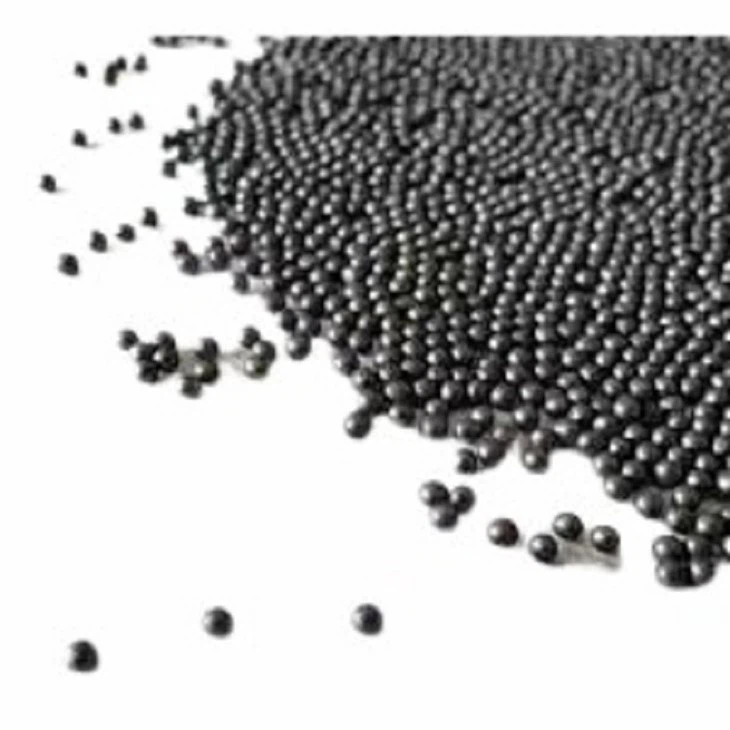

Another more accurate method is using image analysis technology. High - resolution cameras are used to capture images of the treated surface, and specialized software analyzes the images to calculate the percentage of the surface that has been covered by the steel shot impacts. This method provides more objective and reliable results, especially for quality - control purposes in industrial production.
Importance of Coverage Rate in Different Applications
In the automotive industry, a high coverage rate of steel shot abrasive is essential for preparing the surfaces of car parts before painting. A uniform coverage ensures better adhesion of the paint, which improves the durability and appearance of the painted parts. For example, when treating engine blocks or body panels with High Carbon Steel Shot, a high coverage rate helps to remove rust, scale, and old paint, creating a clean and smooth surface for the new paint layer.
In the shipbuilding industry, steel shot abrasive is used to clean and prepare the steel surfaces of ships. A high coverage rate is necessary to prevent corrosion and ensure the structural integrity of the ships. Industrial Steel Shot is commonly used in this application. By achieving a high coverage rate, the steel surfaces can be thoroughly cleaned, and any potential corrosion sites can be eliminated, extending the service life of the ships.
In the aerospace industry, where precision and quality are of utmost importance, the coverage rate of steel shot abrasive must be carefully controlled. When treating aircraft components, such as turbine blades or landing gear, a high and uniform coverage rate is required to meet strict safety and performance standards. Stainless Steel Shot is often used in aerospace applications due to its high - quality and corrosion - resistant properties.
Optimizing the Coverage Rate
To optimize the coverage rate of steel shot abrasive, it's necessary to select the appropriate type and size of steel shots based on the specific application requirements. Conducting test blasts on sample workpieces can help determine the best combination of steel shot parameters, blasting pressure, and angle.
Regular maintenance of the blasting equipment is also crucial. Worn - out nozzles or impellers can affect the distribution and velocity of the steel shots, leading to a lower coverage rate. By keeping the equipment in good working condition, the efficiency and quality of the blasting process can be improved.
Conclusion
The coverage rate of steel shot abrasive is a critical factor in surface treatment processes. Understanding the factors that influence it, measuring it accurately, and optimizing it according to different application requirements are essential for achieving high - quality surface finishes. As a professional steel shot abrasive supplier, we offer a wide range of high - quality products, including Stainless Steel Shot, High Carbon Steel Shot, and Industrial Steel Shot.
If you are looking for reliable steel shot abrasive solutions and want to discuss your specific needs, we are here to help. Contact us for more information and let's start a fruitful cooperation in optimizing your surface treatment processes.
References
- "Surface Engineering for Corrosion and Wear Protection" by M. W. Brummitt
- "Abrasive Blasting Technology Handbook" by industry experts in abrasive blasting


