



What is the comparison of S280 Steel Shot with ceramic shot?
In the realm of surface preparation and shot - peening applications, the choice of abrasive media plays a crucial role in determining the efficiency, quality, and cost - effectiveness of the process. Two commonly used types of media are S280 steel shot and ceramic shot. As a supplier of S280 steel shot, I am well - versed in the characteristics of both materials and can provide a detailed comparison to help you make an informed decision for your specific needs.
Physical Properties
S280 Steel Shot
S280 steel shot is a type of spherical abrasive made from high - carbon steel. It has a relatively high density, typically around 7.8 g/cm³. This high density gives it significant kinetic energy when propelled at a surface, allowing it to effectively remove rust, scale, and other contaminants. The hardness of S280 steel shot is usually in the range of 40 - 50 HRC (Rockwell hardness scale), which provides good wear resistance during the blasting process.
The size of S280 steel shot is standardized. The "280" in its name refers to its approximate diameter in thousandths of an inch, which is about 0.028 inches or 0.71 mm. This size is suitable for a wide range of applications, from general surface cleaning to more precision - oriented shot - peening tasks.
Ceramic Shot
Ceramic shot is made from materials such as aluminum oxide or zirconium oxide. It has a lower density compared to S280 steel shot, usually around 3 - 4 g/cm³. This lower density means that for a given velocity, ceramic shot has less kinetic energy than steel shot of the same size. However, ceramic shot is extremely hard, with hardness values often exceeding 80 on the Rockwell A - scale.
The shape of ceramic shot is also spherical, but it is often more precisely spherical than steel shot. This precise sphericity can contribute to a more uniform surface finish during the blasting process.
Performance in Surface Preparation
Cleaning Efficiency
When it comes to cleaning a surface, S280 steel shot has an edge due to its high density. The greater kinetic energy associated with its high density enables it to more forcefully impact the surface, dislodging heavy rust, scale, and paint more quickly. For example, in large - scale industrial applications such as shipbuilding or steel structure fabrication, S280 steel shot can rapidly clean the surfaces of large metal components.
Ceramic shot, on the other hand, may take more time to achieve the same level of cleaning, especially on surfaces with thick coatings. Its lower kinetic energy means that more passes or a higher blasting pressure may be required to remove stubborn contaminants.
Surface Finish
The high hardness and precise sphericity of ceramic shot make it ideal for achieving a smooth and consistent surface finish. It can be used in applications where a fine surface texture is desired, such as in the aerospace industry for aircraft components. The impact of ceramic shot on the surface creates a uniform pattern without causing excessive surface roughness.
S280 steel shot, while it can also produce a good surface finish, may leave a slightly coarser texture. However, this coarser texture can be beneficial in some cases, such as when the surface needs to be prepared for better adhesion of coatings.
Durability and Reusability
S280 Steel Shot
S280 steel shot has good durability, thanks to its relatively high hardness and the properties of the carbon - steel material. It can withstand multiple impacts during the blasting process without significant breakage. In a well - maintained blasting system, S280 steel shot can be reused many times, which helps to reduce the overall cost of the blasting operation.
However, over time, steel shot can become worn and lose its spherical shape. This wear can affect its performance, leading to a less efficient cleaning process and a less consistent surface finish. Regular inspection and replacement of worn - out steel shot are necessary to maintain optimal performance.
Ceramic Shot
Ceramic shot is extremely durable due to its high hardness. It is resistant to breakage and can maintain its shape and performance over a large number of blasting cycles. This makes it a cost - effective option in the long run, especially for high - precision applications where consistent performance is crucial.
One drawback of ceramic shot is that if it does break, the broken pieces can be quite sharp and may cause damage to the blasting equipment. Therefore, proper filtration systems are required to remove broken ceramic shot from the blasting circuit.
Cost Considerations
Initial Cost
The initial cost of S280 steel shot is generally lower than that of ceramic shot. Steel is a more abundant and less expensive raw material compared to the ceramic materials used to make ceramic shot. This makes S280 steel shot an attractive option for budget - conscious customers or for applications where large volumes of abrasive media are required.
Long - term Cost
When considering the long - term cost, the reusability of both materials needs to be taken into account. As mentioned earlier, both S280 steel shot and ceramic shot can be reused, but ceramic shot may have a longer service life due to its higher durability. In applications where the blasting process is continuous and the quality requirements are high, the long - term cost of using ceramic shot may be comparable or even lower than that of steel shot, despite its higher initial cost.
Applications
S280 Steel Shot
S280 steel shot is widely used in various industries. In the automotive industry, it can be used for cleaning engine blocks, transmission components, and other metal parts. It is also used in the forging industry to clean forged parts and improve their surface quality. Additionally, in the construction industry, S280 steel shot can be used to prepare metal surfaces for painting or galvanizing.
If you are also interested in other types of steel shot, you can check out S660 Steel Shot and S 110 S 230 Alloy Steel Shot, which may be suitable for different applications.
Ceramic Shot
Ceramic shot is commonly used in high - precision applications. In the electronics industry, it can be used for surface finishing of microelectronic components to ensure a smooth and clean surface. In the jewelry industry, ceramic shot is used to polish precious metal pieces. Moreover, in the medical device manufacturing industry, it helps to prepare the surfaces of implants and other medical equipment to meet strict quality standards.
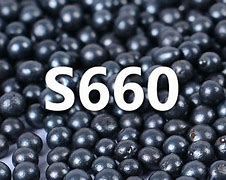

Another related product in the abrasive media category is Intensified Grinding Pill, which can also offer unique advantages in certain applications.
Conclusion
In conclusion, both S280 steel shot and ceramic shot have their own unique properties and advantages. S280 steel shot is a more cost - effective option for general surface preparation tasks, offering high cleaning efficiency and good reusability. Ceramic shot, on the other hand, is the preferred choice for high - precision applications where a smooth and consistent surface finish is required, despite its higher initial cost.
As a supplier of S280 steel shot, I am committed to providing high - quality products and professional advice to help you choose the most suitable abrasive media for your applications. If you are interested in learning more about S280 steel shot or other abrasive products, or if you have specific requirements for your surface preparation projects, please feel free to reach out and start a procurement discussion.
References
- ASTM International. "Standard Specifications for Steel Grit and Steel Shot for Abrasive Blast Cleaning." ASTM A185, 2020.
- Blasting Abrasive Manufacturers' Association. "Technical Handbook on Abrasive Blasting Media." 2019.
- Smith, J. et al. "Comparison of Different Abrasive Media in Surface Preparation Processes." Journal of Industrial Surface Engineering, Vol. 15, 2021, pp. 45 - 52.


