


Hey there! As a supplier of Cast Steel Grit, I've had my fair share of conversations with customers about its cleaning efficiency. And let me tell you, it's a topic that never gets old. So, I thought I'd take a moment to share some insights on what makes Cast Steel Grit such a powerful cleaning agent.
First off, let's talk about what Cast Steel Grit is. It's a type of abrasive media made from high-carbon steel that's been melted and then cast into small, angular particles. These particles are then heat-treated to give them the hardness and toughness needed to withstand the rigors of industrial cleaning applications.
One of the key factors that determines the cleaning efficiency of Cast Steel Grit is its hardness. The harder the grit, the more effectively it can remove stubborn contaminants from surfaces. Cast Steel Grit typically has a hardness rating of between 40 and 60 HRC (Rockwell hardness scale), which makes it much harder than other common abrasive media like sand or glass beads. This means that it can cut through rust, scale, paint, and other tough coatings much more quickly and easily.
Another important factor is the shape of the grit particles. Cast Steel Grit has a sharp, angular shape that allows it to penetrate deep into the surface being cleaned and break up contaminants more effectively. This is in contrast to round or spherical abrasive media, which tend to roll over the surface and may not provide as thorough a cleaning. The angular shape of Cast Steel Grit also helps to create a rough surface profile, which can improve the adhesion of coatings and paints.
The size of the grit particles also plays a role in cleaning efficiency. Cast Steel Grit is available in a range of sizes, from very fine to very coarse. The size of the grit you choose will depend on the specific cleaning application and the type of surface you're working on. For example, if you're cleaning a delicate surface, you may want to use a finer grit to avoid damaging it. On the other hand, if you're removing thick layers of rust or paint, a coarser grit may be more effective.
In addition to its hardness, shape, and size, the cleaning efficiency of Cast Steel Grit can also be affected by other factors such as the blasting pressure, the distance between the blasting nozzle and the surface, and the type of blasting equipment being used. It's important to choose the right combination of these factors to ensure that you're getting the best possible cleaning results.
So, how does Cast Steel Grit compare to other types of abrasive media? Well, as I mentioned earlier, it's much harder than sand or glass beads, which means it can clean more quickly and effectively. It's also more durable, which means it can be reused multiple times, reducing your overall costs. And because it creates a rough surface profile, it can improve the adhesion of coatings and paints, which can save you money in the long run by reducing the need for frequent recoating.
Of course, Cast Steel Grit isn't the only type of abrasive media available. There are other options out there, such as Bearing Steel Grit, which is made from high-quality bearing steel and offers similar cleaning performance. However, each type of abrasive media has its own unique properties and advantages, so it's important to choose the one that's best suited for your specific cleaning needs.
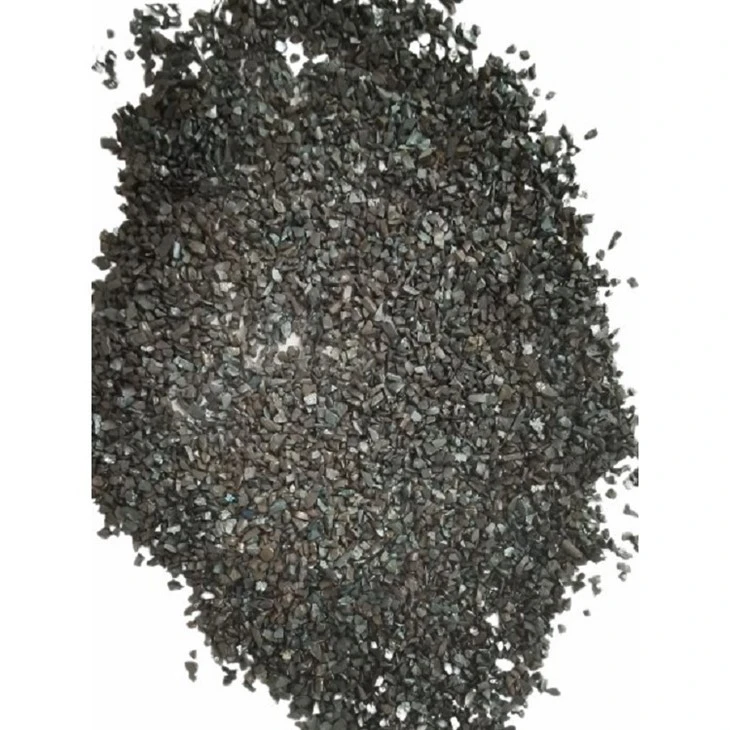

If you're in the market for Cast Steel Grit, I highly recommend checking out our GL 16 Steel Grit. It's a high-quality product that's been specifically designed for industrial cleaning applications. It has a consistent particle size and shape, which ensures uniform cleaning results, and it's available in a range of sizes to meet your specific needs.
In conclusion, the cleaning efficiency of Cast Steel Grit is determined by a number of factors, including its hardness, shape, size, and the blasting conditions. When used correctly, it can be a highly effective and cost-efficient way to clean a variety of surfaces. If you're interested in learning more about Cast Steel Grit or would like to discuss your specific cleaning needs, please don't hesitate to contact us. We'd be happy to help you find the right solution for your business.
References
- "Abrasive Blasting: Principles and Practice" by David A. Drossman
- "Industrial Cleaning: A Guide to Best Practices" by John W. Campbell
- "Surface Preparation and Coating Application" by Robert J. Perry


