



Hey there! As a supplier of stainless steel grit, I've been in the industry for quite some time, and I often get asked about the standards for this stuff. So, I thought I'd share some insights on what makes high - quality stainless steel grit.
First off, let's talk about what stainless steel grit is. It's a type of abrasive material made from stainless steel. It's used in a bunch of applications, like surface preparation, shot peening, and cleaning. You can find it in different sizes and shapes, and each type has its own set of uses.
Chemical Composition
One of the most important standards for stainless steel grit is its chemical composition. Stainless steel is an alloy, which means it's made up of multiple elements. The main elements in stainless steel are iron, chromium, and nickel. Chromium is what gives stainless steel its corrosion - resistant properties. A good quality stainless steel grit should have a chromium content of at least 10.5%. This is what makes it "stainless" and prevents it from rusting when exposed to moisture or other corrosive substances.
Nickel is another key element. It enhances the toughness and ductility of the stainless steel. A typical range for nickel content in stainless steel grit used in many applications is around 8 - 12%. Other elements like carbon, silicon, and manganese are also present in small amounts, and their levels are carefully controlled to ensure the desired properties of the grit. For example, a lower carbon content can improve the corrosion resistance even further.
Physical Properties
Size and Shape
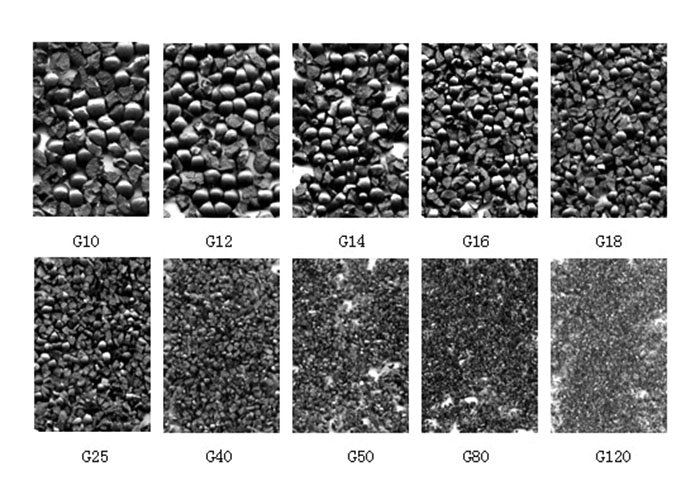
The size of stainless steel grit is a crucial factor. It's usually measured in terms of mesh size. Different applications require different grit sizes. For instance, if you're doing a light surface cleaning, you might use a finer grit like the GP 120 Steel Grit. This finer grit can remove light rust and contaminants without causing too much damage to the surface.
On the other hand, if you're working on a heavy - duty surface preparation job, a coarser grit like the GP 14 Steel Grit or GH 16 Steel Grit might be more appropriate. These coarser grits can quickly remove thick layers of paint, scale, or other stubborn substances.
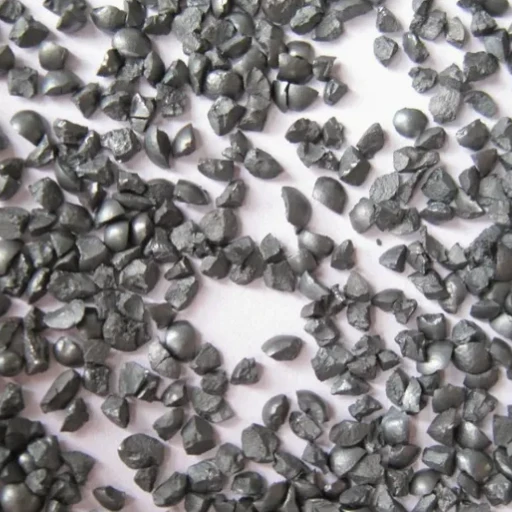
The shape of the grit also matters. Stainless steel grit can be angular or spherical. Angular grits are more aggressive and are great for cutting and removing tough materials. Spherical grits, on the other hand, are better for peening applications as they can create a more uniform surface finish.
Hardness
Hardness is another important physical property. The hardness of stainless steel grit is usually measured using the Rockwell or Vickers hardness scales. A harder grit will be more durable and will last longer during the blasting process. However, it also needs to be balanced with the material you're working on. If the grit is too hard, it can damage the surface of the workpiece. For most general - purpose applications, a hardness range of around 40 - 50 HRC (Rockwell C scale) is common.
Quality Control
As a supplier, we have strict quality control measures in place to ensure that our stainless steel grit meets the required standards. We test the chemical composition of every batch using advanced analytical techniques like spectrometry. This allows us to accurately measure the levels of different elements and make sure they're within the specified ranges.
We also conduct physical tests on the grit. We measure the size distribution using sieving methods to ensure that the grit has the right mix of particle sizes. And we check the hardness using hardness testing equipment.
In addition to these internal tests, our products often need to meet industry - wide standards. For example, in the United States, the Society of Automotive Engineers (SAE) and the American Society for Testing and Materials (ASTM) have set standards for abrasive materials, including stainless steel grit. These standards cover aspects like chemical composition, physical properties, and packaging.
Applications and Standards
The standards for stainless steel grit can also vary depending on the application. In the aerospace industry, for example, the requirements are extremely strict. The grit used for surface preparation of aircraft components needs to be of the highest quality to ensure the safety and performance of the aircraft. The chemical composition must be precisely controlled to prevent any corrosion or contamination that could affect the integrity of the components.
In the automotive industry, stainless steel grit is used for cleaning and preparing engine parts, body panels, and other components. The grit needs to be able to remove contaminants without leaving any scratches or other surface defects. So, the size and shape of the grit are carefully selected to meet these requirements.
Environmental Considerations
In today's world, environmental standards are also becoming increasingly important. Stainless steel grit is a relatively environmentally friendly abrasive compared to some other types. It can be recycled multiple times, which reduces waste. And since it's made from stainless steel, it doesn't contain harmful substances like lead or other heavy metals.
However, there are still some environmental aspects to consider. During the blasting process, dust can be generated, and proper dust collection systems need to be in place to prevent air pollution. Also, the disposal of used grit needs to be done in an environmentally responsible way.
Why Choose Our Stainless Steel Grit
As a supplier, we take pride in offering high - quality stainless steel grit that meets all the relevant standards. Our products are made using state - of - the - art manufacturing processes, and we have a team of experts who oversee every step of production.
We understand that different customers have different needs, and we're always willing to work with you to find the right type of stainless steel grit for your application. Whether you need a specific size, shape, or chemical composition, we can customize our products to meet your requirements.
If you're in the market for stainless steel grit, I encourage you to reach out to us. We can provide you with samples so you can test our products in your own applications. And we'll work with you to offer the best pricing and delivery options. So, don't hesitate to contact us for all your stainless steel grit needs. Let's start a conversation and see how we can help you with your projects.
References
- ASTM International. "ASTM Standards for Abrasive Materials."
- Society of Automotive Engineers (SAE). "SAE Standards for Surface Preparation and Finishing."
- Various industry publications on stainless steel and abrasive materials.


