


As a supplier of Coarse Abrasive, I've spent a significant amount of time delving into the frictional properties of these essential materials. Coarse abrasives play a crucial role in a wide range of industrial applications, from metalworking to wood finishing, and understanding their frictional characteristics is key to maximizing their performance.
Understanding Friction in Coarse Abrasives
Friction is the force that resists the relative motion between two surfaces in contact. In the context of coarse abrasives, friction occurs when the abrasive particles come into contact with the workpiece surface during the grinding, polishing, or blasting process. This frictional force is responsible for removing material from the workpiece, shaping it, and achieving the desired surface finish.
The frictional properties of coarse abrasives are influenced by several factors, including the type of abrasive material, the grain size, the shape of the abrasive particles, and the bonding material used to hold the particles together. Let's take a closer look at each of these factors and how they affect friction.

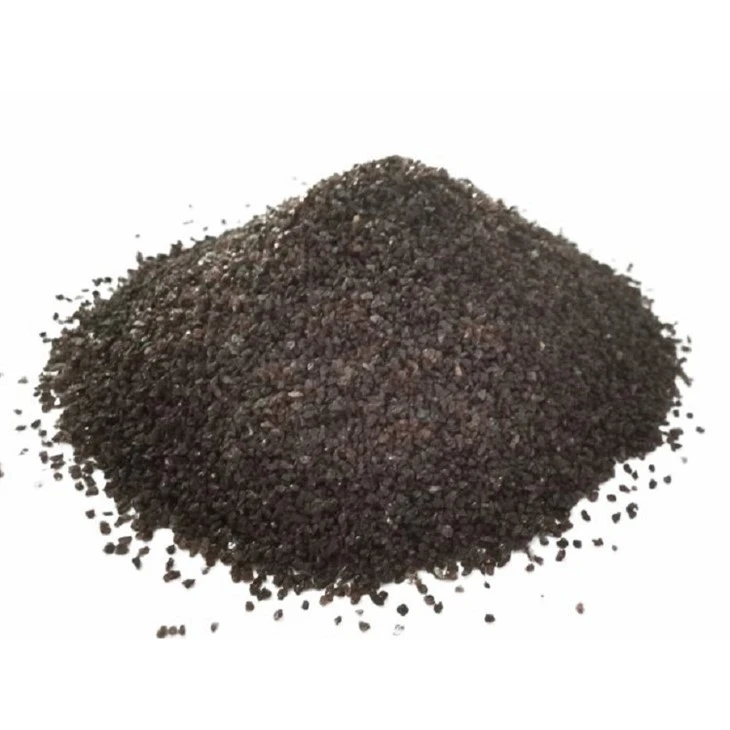
Abrasive Material
Different abrasive materials have different frictional properties. For example, Brown Corundum is a popular choice for many applications due to its high hardness and excellent cutting ability. It has a relatively high coefficient of friction, which means it can effectively remove material from the workpiece surface. On the other hand, softer abrasive materials like glass beads, such as Glass Beads for Blasting Sandblasting Glass Beads, have a lower coefficient of friction and are often used for more delicate applications where a finer finish is required.
Grain Size
The grain size of the abrasive particles also plays a significant role in determining the frictional properties of the coarse abrasive. Larger grain sizes generally have a higher coefficient of friction because they can penetrate deeper into the workpiece surface and remove more material. However, they may also leave a rougher surface finish. Smaller grain sizes, on the other hand, have a lower coefficient of friction and can produce a smoother surface finish, but they may take longer to remove material.
Particle Shape
The shape of the abrasive particles can also affect friction. Angular particles tend to have a higher coefficient of friction than rounded particles because they can dig into the workpiece surface more effectively. This makes angular particles ideal for applications where high material removal rates are required. Rounded particles, on the other hand, are better suited for applications where a smoother surface finish is desired.
Bonding Material
The bonding material used to hold the abrasive particles together can also influence the frictional properties of the coarse abrasive. Different bonding materials have different levels of hardness and flexibility, which can affect how the abrasive particles interact with the workpiece surface. For example, a hard bonding material may hold the abrasive particles more firmly in place, resulting in a higher coefficient of friction. A softer bonding material, on the other hand, may allow the abrasive particles to move more freely, which can reduce friction and improve the surface finish.
Measuring Frictional Properties
Measuring the frictional properties of coarse abrasives is essential for ensuring consistent performance and quality. There are several methods for measuring friction, including the use of friction testers and wear testing machines. These tests can provide valuable information about the coefficient of friction, the wear rate, and the surface finish of the abrasive material.
One common method for measuring friction is the pin-on-disk test. In this test, a small pin made of the abrasive material is pressed against a rotating disk made of the workpiece material. The force required to rotate the disk is measured, and the coefficient of friction is calculated based on this force. This test can provide a good indication of how the abrasive material will perform in real-world applications.
Another method for measuring friction is the belt sanding test. In this test, a belt made of the abrasive material is used to sand a workpiece surface. The amount of material removed from the workpiece surface and the surface finish are measured, and the coefficient of friction can be estimated based on these measurements.
Applications of Coarse Abrasives Based on Frictional Properties
The frictional properties of coarse abrasives make them suitable for a wide range of applications. Here are some common applications where the frictional properties of coarse abrasives are particularly important:
Metalworking
In metalworking applications, coarse abrasives are used for grinding, cutting, and polishing metal surfaces. The high coefficient of friction of these abrasives allows them to effectively remove material from the metal surface, shaping it and achieving the desired finish. For example, Coarse Abrasive is often used for grinding and deburring metal parts, while finer abrasives are used for polishing and finishing.
Woodworking
In woodworking applications, coarse abrasives are used for sanding and shaping wood surfaces. The frictional properties of these abrasives allow them to remove material quickly and efficiently, while also providing a smooth surface finish. Coarse abrasives are often used for initial sanding operations, while finer abrasives are used for finishing and smoothing the wood surface.
Stone and Concrete Grinding
In stone and concrete grinding applications, coarse abrasives are used to remove material from the surface of the stone or concrete. The high coefficient of friction of these abrasives allows them to cut through the hard surface of the stone or concrete, shaping it and achieving the desired finish. Coarse abrasives are often used for rough grinding operations, while finer abrasives are used for polishing and finishing.
Surface Preparation
Coarse abrasives are also used for surface preparation before painting, coating, or bonding. The frictional properties of these abrasives allow them to remove contaminants, rust, and old paint from the surface, creating a clean and rough surface that is suitable for adhesion. This helps to ensure a strong and durable bond between the surface and the coating or adhesive.
Conclusion
In conclusion, the frictional properties of coarse abrasives are complex and influenced by several factors, including the type of abrasive material, the grain size, the particle shape, and the bonding material. Understanding these factors is essential for selecting the right abrasive for a specific application and maximizing its performance.
As a supplier of Coarse Abrasive, I am committed to providing high-quality products that meet the specific needs of our customers. Whether you are looking for a coarse abrasive for metalworking, woodworking, stone and concrete grinding, or surface preparation, we have the expertise and products to help you achieve the best results.
If you are interested in learning more about our coarse abrasive products or have any questions about their frictional properties, please feel free to contact us. We would be happy to discuss your requirements and provide you with a customized solution.
References
- ASTM International. (2019). Standard Test Methods for Wear Testing with a Pin-on-Disk Apparatus. ASTM G99 - 17.
- Rowe, W. B. (2009). Principles of Modern Grinding Technology. Springer.
- Schipper, D. J., & Venner, C. H. (2007). Tribology for Engineers. Elsevier.


