



Abrasive machining is a crucial process in various industries, from automotive to aerospace, electronics to construction. As an abrasive supplier, I've witnessed firsthand the diverse applications and the significant impact of abrasive products on manufacturing processes. However, like any manufacturing technique, abrasive machining comes with its own set of challenges. In this blog, I'll delve into some of the most common challenges faced in abrasive machining and how we, as an abrasive supplier, strive to address them.
Material Compatibility
One of the primary challenges in abrasive machining is ensuring compatibility between the abrasive material and the workpiece material. Different materials have unique properties, such as hardness, toughness, and chemical composition, which can significantly affect the machining process. For instance, machining hard materials like ceramics or hardened steels requires abrasives with high hardness and wear resistance. In contrast, softer materials like aluminum or copper demand abrasives that can provide a smooth finish without causing excessive material removal.
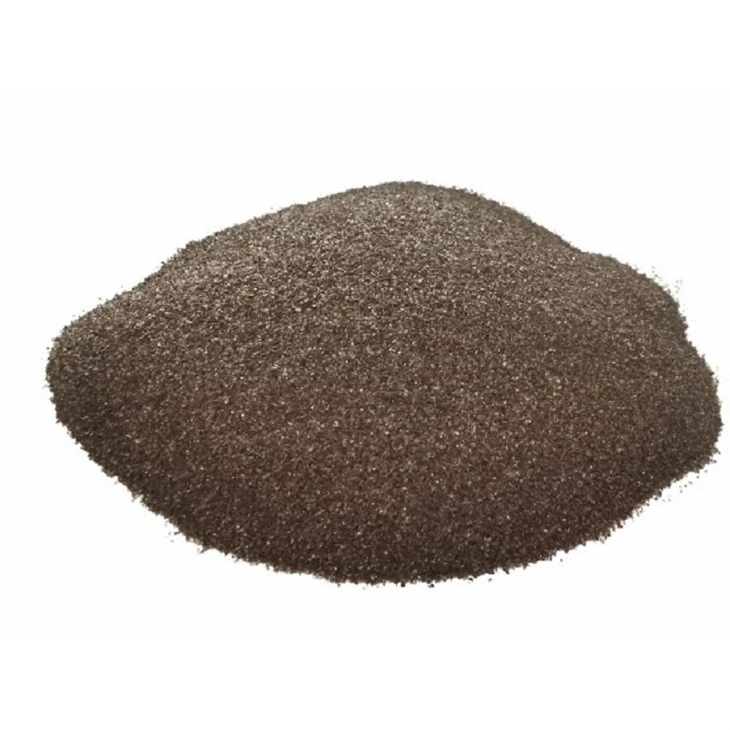
At our company, we offer a wide range of abrasive products to cater to different material requirements. Our Brown Corundum is a popular choice for machining ferrous metals and other materials with medium to high hardness. It has excellent cutting ability and durability, making it suitable for heavy-duty grinding operations. On the other hand, for more delicate materials, our Grinding Wheel Abrasive can be customized to provide a precise and smooth finish.
Surface Finish and Dimensional Accuracy
Achieving the desired surface finish and dimensional accuracy is another significant challenge in abrasive machining. In many applications, such as precision components in the aerospace or medical industries, even the slightest deviation from the specified dimensions or surface roughness can lead to product failure. Factors such as abrasive grain size, wheel speed, feed rate, and coolant usage can all influence the surface finish and dimensional accuracy.
To address this challenge, we work closely with our customers to understand their specific requirements and recommend the most suitable abrasive products. We offer abrasives with a variety of grain sizes and bond types to achieve different levels of surface finish and material removal rates. Additionally, we provide technical support and training to help our customers optimize their machining processes and ensure consistent quality.
Abrasive Wear and Tool Life
Abrasive wear is an inevitable issue in abrasive machining, which can lead to a decrease in cutting performance, increased machining time, and higher costs. The rate of abrasive wear depends on several factors, including the type of abrasive material, the workpiece material, the machining parameters, and the operating conditions.
As an abrasive supplier, we focus on developing high-quality abrasives with excellent wear resistance. Our research and development team is constantly working on improving the manufacturing processes and materials to enhance the tool life of our products. For example, our Ribbon Abrasive is designed with a unique structure that provides uniform wear and long-lasting performance. By using our abrasives, our customers can reduce the frequency of tool replacement and improve their overall productivity.
Heat Generation and Thermal Damage
During abrasive machining, a significant amount of heat is generated due to the friction between the abrasive and the workpiece. Excessive heat can cause thermal damage to the workpiece, such as surface hardening, cracking, or distortion, which can compromise the quality and performance of the final product. Moreover, high temperatures can also accelerate abrasive wear and reduce tool life.
To mitigate the effects of heat generation, we offer abrasives with good heat dissipation properties. We also recommend the use of coolants and lubricants during the machining process to reduce friction and heat. Our technical experts can provide guidance on the appropriate coolant selection and application methods to ensure optimal performance and prevent thermal damage.

Environmental and Safety Concerns
In recent years, environmental and safety concerns have become increasingly important in the manufacturing industry. Abrasive machining can generate dust, noise, and other pollutants, which can pose a risk to the health and safety of workers and the environment.
As a responsible abrasive supplier, we are committed to developing and providing environmentally friendly abrasive products. We use sustainable manufacturing processes and materials to minimize the environmental impact of our products. Additionally, we provide safety training and guidelines to our customers to ensure the proper handling and use of our abrasives.
Cost Management
Cost is always a critical factor in any manufacturing process. Abrasive machining can be expensive, especially when considering the cost of abrasives, equipment, labor, and energy. Therefore, finding ways to reduce costs without sacrificing quality is a major challenge for many manufacturers.
At our company, we understand the importance of cost management for our customers. We offer competitive pricing on our abrasive products without compromising on quality. We also provide value-added services, such as technical support, process optimization, and inventory management, to help our customers reduce their overall machining costs.
Conclusion
Abrasive machining is a complex and challenging process that requires careful consideration of various factors. As an abrasive supplier, we are dedicated to helping our customers overcome these challenges by providing high-quality abrasive products, technical support, and innovative solutions. Whether you are facing issues with material compatibility, surface finish, abrasive wear, heat generation, environmental concerns, or cost management, we have the expertise and resources to assist you.
If you are interested in learning more about our abrasive products or discussing your specific machining requirements, please feel free to contact us. We look forward to the opportunity to work with you and help you achieve your manufacturing goals.
References
- Kalpakjian, S., & Schmid, S. R. (2010). Manufacturing Engineering and Technology. Pearson Prentice Hall.
- Trent, E. M., & Wright, P. K. (2000). Metal Cutting. Butterworth-Heinemann.
- Shaw, M. C. (2005). Metal Cutting Principles. Oxford University Press.


