



Hey there! As a supplier of Micro Steel Grit, I often get asked whether our product is suitable for use in high-temperature environments. It's a great question, and one that I'm more than happy to dive into.
First off, let's talk a bit about what Micro Steel Grit is. It's a type of abrasive material made from high-quality steel that's been processed into small, angular particles. These particles are super tough and have excellent cutting and cleaning properties, which makes them ideal for a whole bunch of industrial applications, like surface preparation, shot peening, and cleaning metal parts.
Now, when it comes to high-temperature environments, things get a bit more complicated. High temperatures can have a significant impact on the performance and durability of materials, and Micro Steel Grit is no exception. But the good news is that under the right conditions, it can still be a viable option.
One of the key factors to consider is the melting point of the steel used to make the grit. Most Micro Steel Grit is made from high-carbon steel, which has a relatively high melting point, usually around 1370 - 1510°C (2500 - 2750°F). This means that in many high-temperature applications, the grit won't melt right away.
However, just because it doesn't melt doesn't mean it won't be affected. At high temperatures, the steel can start to lose its hardness and strength. This is due to a process called annealing, where the heat causes the steel's crystal structure to change, making it softer. When the grit loses its hardness, it becomes less effective at cutting and cleaning, and it may wear out more quickly.

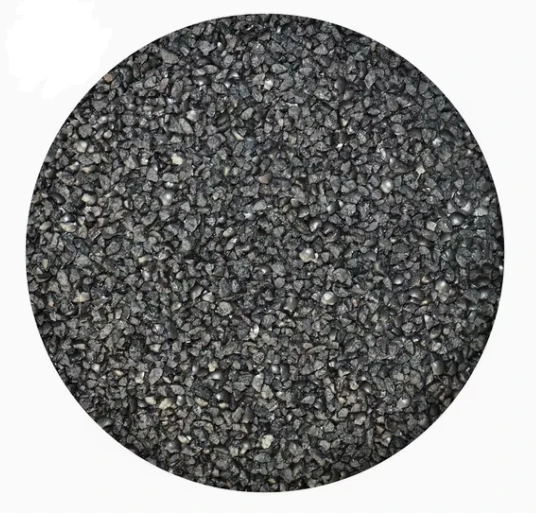
Another issue is oxidation. When steel is exposed to high temperatures in the presence of oxygen, it can form an oxide layer on its surface. This oxide layer can make the grit less sharp and reduce its cutting efficiency. In some cases, the oxide layer can also cause the grit particles to stick together, which can clog up the blasting equipment.
But don't worry, there are ways to mitigate these problems. For example, if you're using Micro Steel Grit in a high-temperature environment, you can choose a grit with a higher carbon content. Higher carbon steel tends to be more resistant to annealing and oxidation. We offer different grades of Micro Steel Grit, such as GH 14 Steel Grit, GL 120 Steel Grit, and GP 50 Steel Grit, which have different carbon contents and properties to suit various applications.
You can also control the temperature and oxygen levels in the environment. If possible, try to keep the temperature as low as you can while still achieving your desired results. You can also use a protective atmosphere, such as nitrogen, to reduce the amount of oxygen and prevent oxidation.
Let's take a look at some real-world examples of where Micro Steel Grit can be used in high-temperature environments. One common application is in the aerospace industry. In aircraft engine manufacturing, parts need to be cleaned and prepared for coating or assembly. These parts are often made of high-strength alloys and need to be treated at high temperatures to ensure proper bonding. Micro Steel Grit can be used in this process, as long as the temperature and other conditions are carefully controlled.
Another example is in foundries. When casting metal parts, the molds need to be cleaned and prepared for the next pour. This often involves high-temperature processes, and Micro Steel Grit can be an effective abrasive for removing any residual metal or debris from the molds.
So, to answer the question, yes, Micro Steel Grit can be suitable for use in high-temperature environments, but it's not a one-size-fits-all solution. You need to carefully consider the specific temperature, oxygen levels, and other factors in your application, and choose the right type of grit accordingly.
If you're in the market for Micro Steel Grit for a high-temperature application, or any other application for that matter, I'd love to chat with you. We've got a team of experts who can help you select the best product for your needs and answer any questions you might have. Whether you're looking for GH 14 Steel Grit, GL 120 Steel Grit, or GP 50 Steel Grit, we've got you covered.
Don't hesitate to reach out if you want to discuss your requirements further. We're here to make sure you get the most out of our Micro Steel Grit and achieve the best results in your operations.
References:
- "The Science of Steel" - A comprehensive guide on the properties and behavior of steel under different conditions.
- "Industrial Abrasives Handbook" - Provides in - depth information on the use of abrasive materials in various industrial applications.


