



Hey there! I'm a supplier of Garnet Sand, and today I'm gonna walk you through how we produce Garnet Sand on a large scale. It's a pretty interesting process, so let's dive right in.
1. Garnet Sand: An Overview
First off, let's talk a bit about what Garnet Sand is. Garnet is a group of silicate minerals that come in a variety of colors, but for sand production, we mostly focus on the ones that are suitable for industrial uses. Garnet Sand is widely used in many industries, such as waterjet cutting, sandblasting, and filtration. It's known for its hardness, sharp edges, and chemical stability, which make it a great abrasive material. You can learn more about its use as a Sandblasting Abrasive.
2. Mining the Garnet Ore
The first step in large - scale Garnet Sand production is mining the garnet ore. Garnet deposits can be found in different parts of the world. We usually look for areas where the garnet concentration is high and the quality is good.
We use different mining methods depending on the location and nature of the deposit. In some cases, open - pit mining is the way to go. This involves removing the overlying soil and rock to access the garnet ore. Heavy machinery like excavators and bulldozers are used to dig out the ore.
In other situations, underground mining might be necessary. This is more complex and requires more safety measures. Miners use drills and explosives to break up the rock containing the garnet ore. Once the ore is extracted, it's transported to the processing plant.
3. Crushing and Grinding
At the processing plant, the first thing we do is crush the garnet ore. We use crushers to break the large chunks of ore into smaller pieces. This makes it easier to handle and further process. There are different types of crushers, such as jaw crushers and cone crushers.
After crushing, the next step is grinding. We want to reduce the size of the garnet particles even more. Ball mills are commonly used for this purpose. The crushed ore is fed into the ball mill, which contains steel balls. As the mill rotates, the steel balls crush and grind the ore, turning it into a fine powder.
4. Screening and Classification
Once the garnet is ground into a powder, we need to separate the particles according to their size. This is done through screening and classification.
We use vibrating screens with different mesh sizes. The powder is passed through these screens, and the particles are separated into different fractions based on whether they can pass through the mesh or not. This allows us to get the specific particle sizes that our customers need.

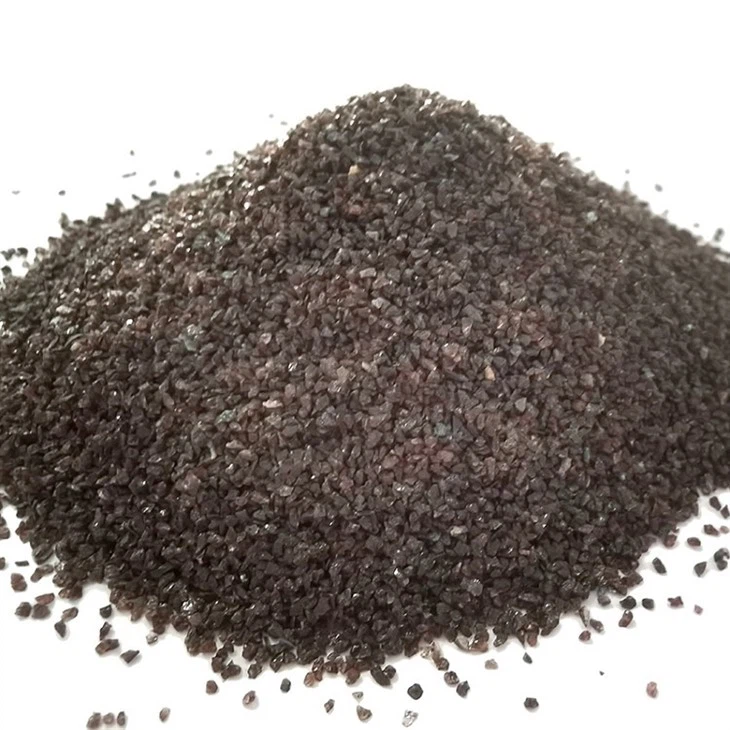
For more precise classification, we might also use hydrocyclones. These work by using centrifugal force to separate the particles based on their size and density. This helps us to produce Garnet Sand with very consistent particle sizes.
5. Washing and Purification
The ground and classified Garnet Sand still might contain some impurities. To remove these, we wash the sand. We use water to rinse away any dirt, clay, or other unwanted materials.
In addition to washing, we also perform purification processes. One common method is magnetic separation. Garnet has different magnetic properties compared to some of the impurities. By passing the sand through a magnetic field, we can separate the magnetic impurities from the garnet.
Another purification method is flotation. In this process, we add chemicals to the sand - water mixture. These chemicals make the garnet particles float to the surface, while the impurities sink to the bottom. This allows us to collect the pure garnet.
6. Drying
After washing and purification, the Garnet Sand is wet. We need to dry it before packaging and shipping. We use dryers to remove the moisture. There are different types of dryers, such as rotary dryers and fluidized - bed dryers.
The drying process is carefully controlled to ensure that the Garnet Sand doesn't get over - heated or damaged. Once the sand reaches the desired moisture content, it's ready for the final step.
7. Packaging and Quality Control
We package the Garnet Sand in different sizes of bags or containers, depending on the customer's requirements. Before shipping, we conduct strict quality control checks.
We test the particle size distribution, hardness, and chemical composition of the Garnet Sand. This ensures that the sand meets the industry standards and our customers' expectations. We also check for any remaining impurities. Only after passing these quality control tests is the Garnet Sand shipped out to our customers.
Comparing with Other Abrasives
Garnet Sand is not the only abrasive material out there. There are others like Brown Corundum and 325 Mesh Brown Corundum. Brown Corundum is also a popular abrasive, known for its high hardness and durability. However, Garnet Sand has some advantages. It's more environmentally friendly as it's a natural mineral and doesn't produce harmful dust during use. It also has a better cutting efficiency in some applications, especially in waterjet cutting.
Conclusion
So, that's the whole process of large - scale Garnet Sand production. It's a complex but well - controlled process that ensures we produce high - quality Garnet Sand for our customers. Whether you're in the waterjet cutting industry, sandblasting business, or need Garnet Sand for filtration, we've got you covered.
If you're interested in purchasing Garnet Sand for your business, we'd love to talk to you. Just reach out to us, and we can discuss your specific requirements and provide you with a competitive quote. We're always here to help you find the best Garnet Sand solution for your needs.
References
- "Industrial Minerals and Rocks" by the Society for Mining, Metallurgy, and Exploration
- "Abrasive Technology Handbook" by various industry experts


