



As a supplier of S110 Steel Shot, I've had numerous inquiries about its performance in low-temperature environments. This blog post aims to delve into the characteristics of S110 Steel Shot and how it fares when faced with cold conditions.
Understanding S110 Steel Shot
S110 Steel Shot is a popular abrasive media widely used in various industries, including metalworking, automotive, and aerospace. It is known for its high hardness, excellent durability, and consistent particle size distribution. These properties make it an ideal choice for surface preparation, peening, and shot blasting applications.
The composition of S110 Steel Shot typically consists of high-quality steel with controlled amounts of carbon and other alloying elements. This precise composition ensures that the shot has the right balance of hardness and toughness, allowing it to withstand the rigors of repeated impacts during the blasting process.
Low-Temperature Effects on Materials
Before discussing how S110 Steel Shot performs in low-temperature environments, it's important to understand the general effects of cold temperatures on materials. As the temperature drops, materials tend to become more brittle. This is because the atomic structure of the material becomes more rigid, reducing its ability to deform plastically.
In the case of metals, low temperatures can lead to a phenomenon known as the ductile-to-brittle transition. At high temperatures, metals are generally ductile, meaning they can be easily deformed without breaking. However, as the temperature decreases below a certain critical point, the metal becomes brittle and is more likely to fracture under stress.
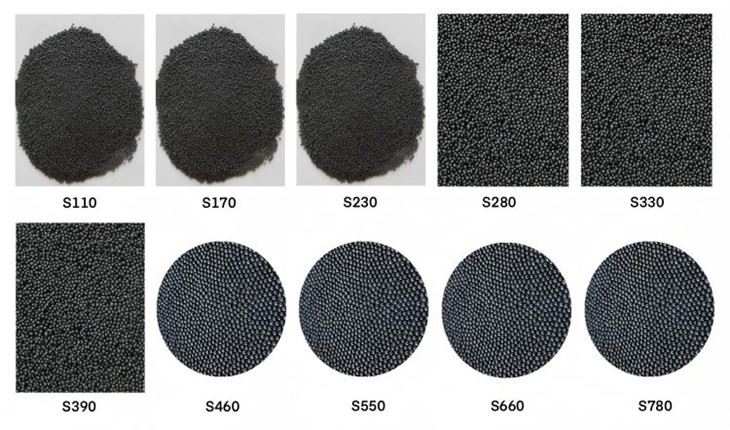
Performance of S110 Steel Shot in Low Temperatures
One of the key factors that determine the performance of S110 Steel Shot in low-temperature environments is its hardness. S110 Steel Shot is typically heat-treated to achieve a high level of hardness, which helps it maintain its shape and integrity during the blasting process. This hardness also makes it more resistant to the embrittlement effects of low temperatures.

In addition to its hardness, the particle size distribution of S110 Steel Shot also plays a crucial role in its performance. The consistent particle size ensures that the shot provides a uniform and efficient blasting action, regardless of the temperature. This is particularly important in low-temperature environments, where any variation in the shot's performance could lead to inconsistent surface preparation results.
Another advantage of S110 Steel Shot in low-temperature environments is its high density. The high density of the shot allows it to carry more kinetic energy, which is essential for effective blasting. Even at low temperatures, the shot can still deliver a powerful impact, ensuring that the surface is properly cleaned and prepared.

Comparison with Other Types of Steel Shot
To better understand the performance of S110 Steel Shot in low-temperature environments, it's useful to compare it with other types of steel shot. For example, High Carbon Steel Shot is known for its high carbon content, which gives it a very high hardness. However, this high hardness also makes it more brittle, especially at low temperatures. As a result, high carbon steel shot may be more prone to fracture during the blasting process in cold conditions.
Stainless Steel Shot, on the other hand, is highly resistant to corrosion and oxidation. While it may perform well in low-temperature environments, its relatively lower hardness compared to S110 Steel Shot may result in a less efficient blasting action.
Primary Quenching Steel Shot is produced through a specific quenching process, which gives it unique properties. However, its performance in low-temperature environments may vary depending on the exact composition and processing parameters.
Applications in Low-Temperature Industries
S110 Steel Shot's excellent performance in low-temperature environments makes it suitable for a variety of applications in industries that operate in cold conditions. For example, in the oil and gas industry, where pipelines and equipment are often exposed to low temperatures, S110 Steel Shot can be used for surface preparation before coating or painting. This helps to ensure a strong and durable bond between the coating and the substrate, protecting the equipment from corrosion and wear.
In the shipbuilding industry, where vessels may operate in cold waters, S110 Steel Shot can be used for shot blasting the hull and other components. This helps to remove rust, scale, and other contaminants, improving the surface finish and preparing the metal for further processing.

Quality Assurance and Testing
As a supplier of S110 Steel Shot, we are committed to providing our customers with high-quality products that meet their specific requirements. To ensure the quality of our S110 Steel Shot, we conduct rigorous testing at every stage of the production process.
We test the hardness, density, and particle size distribution of the shot to ensure that it meets the industry standards. In addition, we also conduct performance testing in low-temperature environments to verify its effectiveness. This allows us to provide our customers with reliable and consistent products that perform well in any conditions.
Conclusion
In conclusion, S110 Steel Shot performs exceptionally well in low-temperature environments. Its high hardness, consistent particle size distribution, and high density make it resistant to the embrittlement effects of cold temperatures and ensure efficient blasting performance. Whether you are in the oil and gas, shipbuilding, or any other industry that requires surface preparation in low-temperature conditions, S110 Steel Shot is a reliable choice.
If you are interested in learning more about our S110 Steel Shot or would like to discuss your specific requirements, please feel free to contact us. We are here to help you find the best solution for your surface preparation needs.
References
- "Metallurgy of Steel Shot and Grit" - Industry Handbook
- "Surface Preparation in Low-Temperature Environments" - Technical Research Paper


