



Hey there! As a carbon steel grit supplier, I've gotten tons of questions about how carbon steel grit stacks up against silicon carbide grit. So, I thought I'd dive into this topic and break it down for you.
Let's start with the basics. Carbon steel grit is made from high - quality carbon steel. It's tough, durable, and can be reused multiple times. On the flip side, silicon carbide grit is a synthetic abrasive made from silicon and carbon. It's super hard and has excellent cutting ability.
Physical Properties
When it comes to hardness, silicon carbide takes the lead. It has a Mohs hardness of around 9.5, which is just below diamond. Carbon steel grit, on the other hand, has a hardness that typically ranges from 40 - 65 HRC (Rockwell hardness scale). This means silicon carbide can cut through materials more aggressively. But here's the thing, that extreme hardness also makes silicon carbide more brittle. Carbon steel grit, being more malleable, can withstand impacts better without shattering.
In terms of shape, carbon steel grit usually has a sharp, angular shape. This shape gives it good cutting and cleaning power. When it hits a surface, it can chip away rust, scale, and other contaminants effectively. Silicon carbide grit also has an angular shape, but its particles are often more uniform in size. This uniformity can result in a more consistent finish on the surface being treated.
Performance in Different Applications
Surface Preparation
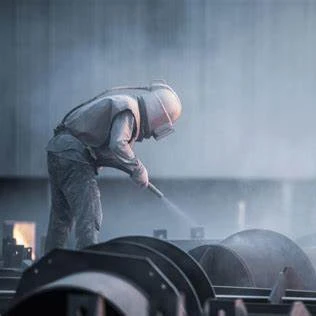
For surface preparation in industries like automotive and aerospace, both carbon steel grit and silicon carbide grit have their places. Carbon steel grit is great for removing heavy rust and scale from metal surfaces. It can quickly clean large areas and prepare the surface for painting or coating. For example, if you're prepping a rusty car body, using Steel Grit GH25 can get the job done efficiently. The grit can blast away the rust, leaving a clean, textured surface that paint can adhere to.
Silicon carbide grit, however, is better suited for precision surface preparation. It can be used to smooth and polish surfaces to a high - quality finish. In the aerospace industry, where components need to have a very smooth and clean surface, silicon carbide grit is often the go - to choice. It can also be used for fine - tuning the surface roughness of molds.
Grinding and Cutting
In grinding and cutting applications, silicon carbide grit shines. Its high hardness allows it to cut through hard materials like ceramics, glass, and certain types of composites. For example, in the manufacturing of ceramic tiles, silicon carbide grit is used to cut and shape the tiles to the desired size and shape.
Carbon steel grit, while not as effective for cutting hard materials, is excellent for grinding metals. It can be used in metal fabrication shops to remove excess material, smooth welds, and deburr edges. Steel Grit GP14 is a popular choice for these types of grinding applications. It can work on a variety of metals, including steel, aluminum, and copper.
Cost - effectiveness
Cost is always a factor when choosing an abrasive. Carbon steel grit is generally more cost - effective in the long run. Since it can be reused multiple times, you don't have to keep buying new abrasive material. After a blasting operation, the carbon steel grit can be collected, cleaned, and reused. This reduces the overall cost of the surface treatment process.
Silicon carbide grit, on the other hand, is more expensive upfront. And because it's more brittle, it tends to break down faster during use. This means you may need to replace it more frequently, which can add to the overall cost. However, in applications where its unique properties are required, the higher cost may be justified.
Environmental Impact
From an environmental perspective, carbon steel grit has an edge. It's made from steel, which is a recyclable material. When the grit finally wears out, it can be recycled into new steel products. This reduces waste and conserves natural resources.

Silicon carbide grit, being a synthetic material, has a more complex manufacturing process. The production of silicon carbide requires a significant amount of energy, and the disposal of used grit can be more challenging. However, some companies are working on developing more sustainable ways to produce and recycle silicon carbide grit.
Availability
Carbon steel grit is widely available in the market. As a supplier, I can offer a variety of grades and sizes to meet different customer needs. Whether you need a coarse grit for heavy - duty cleaning or a fine grit for precision work, there's a carbon steel grit option for you. For example, Steel Grit GH40 is a fine - grade grit that can be used for more delicate surface treatments.
Silicon carbide grit is also available, but its availability may be more limited in some regions. It's often more commonly found in specialty stores or suppliers that focus on high - performance abrasives.
Conclusion
So, which one is better, carbon steel grit or silicon carbide grit? Well, it really depends on your specific needs. If you're looking for a cost - effective, reusable abrasive for general metal surface preparation and grinding, carbon steel grit is a great choice. It can handle heavy - duty jobs and is widely available.
On the other hand, if you need an abrasive for precision work on hard materials, silicon carbide grit may be the way to go. Its high hardness and cutting ability make it ideal for applications where a high - quality finish is required.
If you're interested in learning more about our carbon steel grit products or have any questions about which grit is right for your application, feel free to reach out. We're here to help you make the best choice for your project. Let's start a conversation and see how we can meet your abrasive needs!
References
- "Abrasive Materials Handbook" by Abrasive Industry Association
- "Surface Preparation and Coating Application Guide" by Industrial Coating Manufacturers Association


