


Hey there! As a supplier of G14 Steel Grit, I often get asked if this particular steel grit can be used for deburring. Well, let's dive right into it and find out.
First off, what is deburring? Deburring is the process of removing the small, unwanted bits of material - burrs - that are left on a workpiece after machining operations like cutting, drilling, or milling. These burrs can affect the functionality, safety, and appearance of the final product. So, getting rid of them is crucial.
Now, let's talk about G14 Steel Grit. G14 steel grit is a type of abrasive media known for its hardness and durability. It's made from high - quality steel, which gives it a consistent shape and size. The "G14" refers to its particle size, which is relatively large compared to some other grit sizes. This size matters a lot when it comes to deburring.
One of the key factors in deburring is the ability of the abrasive to reach the burrs and remove them without damaging the base material. G14 steel grit has a great balance in this regard. Its relatively large size allows it to deliver a strong impact force. When propelled at high speed onto a workpiece, it can effectively break off those stubborn burrs.
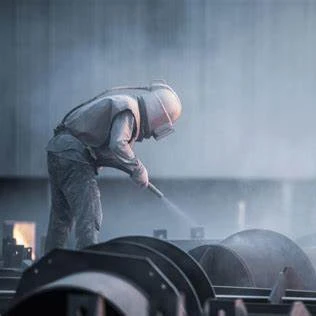
For example, in industries where metal parts are mass - produced, like the automotive or aerospace industries, deburring is a routine process. G14 steel grit can be used in various deburring methods, such as shot blasting. In shot blasting, the steel grit is propelled by a wheel or compressed air onto the surface of the workpiece. The impact of the G14 steel grit on the burrs causes them to break away from the part.
Another advantage of using G14 steel grit for deburring is its reusability. Unlike some other abrasive materials that break down quickly, G14 steel grit can withstand multiple impacts. This means that you can use it over and over again, which is not only cost - effective but also environmentally friendly.
However, it's not all sunshine and rainbows. There are some situations where G14 steel grit might not be the best choice for deburring. If the workpiece is made of a very soft material, the large size and high impact force of G14 steel grit could potentially damage the base material. In such cases, you might want to consider using a finer grit size. For instance, if you're working with aluminum parts, which are relatively soft, a finer grit like GH 25 Steel Grit could be a better option.
On the other hand, if the burrs are very small and delicate, G14 steel grit might be too aggressive. In these situations, a smaller and more precise grit, like GH 12 Steel Grit, would be more suitable.
But for most common deburring applications involving hard metals like steel and iron, G14 steel grit is a top - notch choice. It can handle a wide range of burr sizes and shapes, and it gets the job done efficiently.
Let's also talk about the surface finish. After deburring with G14 steel grit, the surface of the workpiece will have a certain texture. This texture can be beneficial in some cases. For example, in applications where a good grip is required, the slightly rough surface created by G14 steel grit can provide better adhesion. However, if a smooth surface finish is needed, additional finishing processes might be required after deburring.
In the deburring process, the equipment used also plays a crucial role. You need to make sure that the shot blasting machine or other equipment you're using is compatible with G14 steel grit. The speed at which the grit is propelled, the angle of impact, and the distance from the nozzle to the workpiece all affect the deburring result.
If you're new to using G14 steel grit for deburring, it's a good idea to start with some test runs. Try it on a sample workpiece to see how it performs. This way, you can adjust the parameters of the deburring process to get the best results.
Now, you might be wondering how G14 steel grit compares to other types of deburring media. Well, compared to ceramic grit, G14 steel grit is generally more cost - effective. Ceramic grit is more expensive, and while it can provide a very fine finish, it might not be as effective in removing large burrs as G14 steel grit.

Compared to plastic media, G14 steel grit is much more durable. Plastic media is often used for very delicate deburring tasks, but it breaks down easily and needs to be replaced frequently.
In conclusion, G14 steel grit can definitely be used for deburring, especially for hard metal parts with medium to large - sized burrs. It offers a good combination of impact force, reusability, and cost - effectiveness. But as with any process, it's important to consider the specific requirements of your deburring job. If you need a finer finish or are working with soft materials, you might want to explore other options like GH 25 Steel Grit or GH 12 Steel Grit. And if you're looking for a similar grit size with different properties, you can check out GP 14 Steel Grit.
If you're interested in using G14 steel grit for your deburring needs or have any questions about it, feel free to reach out. I'm here to help you make the best choice for your deburring process.
References:
- Metal Finishing Handbook, various editions
- Industrial Abrasives: Properties and Applications, industry - specific research papers
- Shot Blasting and Peening: Principles and Practices, industry - related publications


