



Hey there! I'm a supplier of bearing steel sand, and I often get asked this question: "Can bearing steel sand be used for precision sanding?" Well, let's dive right into it and find out.
First off, what is bearing steel sand? It's a type of abrasive material made from high - quality bearing steel. This steel is known for its hardness, toughness, and wear - resistance. These properties make it a promising candidate for various sanding applications.
When it comes to precision sanding, we're talking about achieving a very smooth and accurate surface finish. This is crucial in industries like aerospace, automotive, and precision engineering, where even the slightest imperfection can lead to performance issues.
Advantages of Using Bearing Steel Sand for Precision Sanding
Hardness and Durability
Bearing steel sand is extremely hard. Its high hardness means it can effectively remove material from the workpiece without wearing down quickly. For example, when sanding hard metals like stainless steel, a softer abrasive would dull rapidly, but bearing steel sand can keep cutting for a longer time. This durability not only saves on the cost of constantly replacing abrasives but also ensures consistent sanding results throughout the process.
Uniform Particle Size
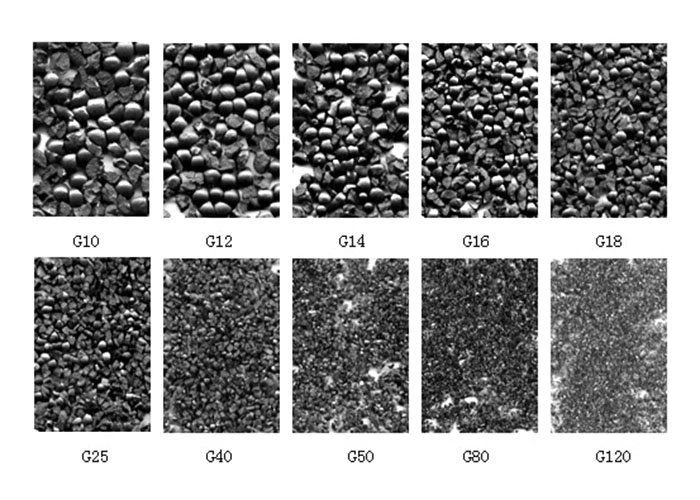
One of the key requirements for precision sanding is a uniform abrasive particle size. Bearing steel sand can be manufactured to have a very consistent particle size distribution. This uniformity allows for a more predictable and even sanding action. When you're working on a surface that requires a specific roughness or finish, the consistent particle size of bearing steel sand helps you achieve that with greater accuracy.
Self - Sharpening Properties
Bearing steel sand has self - sharpening characteristics. As it breaks down during the sanding process, new sharp edges are exposed. This means that the sanding performance remains relatively constant over time. In precision sanding, this is a huge advantage because it helps maintain a stable surface finish. You don't have to worry about the abrasive becoming dull and leaving an uneven or rough surface.
Applications in Precision Sanding
Aerospace Components
In the aerospace industry, precision is everything. Components like turbine blades, engine parts, and aircraft structural elements need to be sanded to extremely tight tolerances. Bearing steel sand can be used to remove surface imperfections, smooth out welds, and prepare surfaces for coating. The high - quality finish achieved with bearing steel sand ensures the optimal performance and safety of these critical components.
Automotive Parts
Automotive manufacturers also rely on precision sanding for parts such as engine blocks, transmission components, and brake discs. Bearing steel sand can be used to improve the surface finish of these parts, which in turn enhances their performance and longevity. For example, a smoother surface on a brake disc can reduce noise and improve braking efficiency.
Precision Engineering
In the field of precision engineering, where small, intricate parts are produced, bearing steel sand is a valuable tool. It can be used for deburring, edge rounding, and surface polishing of components like gears, shafts, and molds. The ability to achieve a high - precision finish with bearing steel sand is essential for the proper functioning of these parts.
Comparing with Other Abrasives
There are other abrasives available in the market, such as silicon carbide and aluminum oxide. While these abrasives are commonly used, bearing steel sand has some distinct advantages.
Silicon carbide is a very hard abrasive, but it can be brittle. In precision sanding, the brittleness can lead to uneven particle breakdown, resulting in an inconsistent surface finish. Aluminum oxide, on the other hand, may not have the same level of hardness and durability as bearing steel sand, especially when sanding hard metals.
Let's take a look at some specific products in our bearing steel sand range. We have the GH 18 Steel Grit, which is ideal for heavy - duty precision sanding applications. Its high - grade steel composition provides excellent cutting performance and long - lasting durability.
Another great option is the GP 80 steel grit. This grit is known for its fine particle size and uniform distribution, making it perfect for achieving a smooth and precise surface finish.
Grit Blasting and Precision Sanding
Grit blasting is a common method used in precision sanding, and bearing steel sand is well - suited for this process. Grit Blasting Stainless Steel with bearing steel sand can effectively remove rust, scale, and other contaminants from the surface. The high - velocity impact of the steel sand particles on the stainless steel surface helps to achieve a clean and smooth finish.
During grit blasting, the properties of bearing steel sand, such as its hardness and self - sharpening ability, come into play. The hard particles can penetrate and remove tough surface layers, while the self - sharpening feature ensures continuous and efficient sanding.
Limitations and Considerations
While bearing steel sand has many advantages for precision sanding, there are also some limitations and considerations.
Cost
Bearing steel sand can be more expensive than some other abrasives. However, when you consider its durability and the high - quality results it can achieve, the long - term cost may be justified. In applications where precision is critical and the cost of rework or component failure is high, the investment in bearing steel sand can be well worth it.
Dust Generation
Like any abrasive, bearing steel sand generates dust during the sanding process. This dust can be a health hazard if proper safety measures are not taken. It's important to use appropriate ventilation systems and personal protective equipment, such as respirators and goggles, when working with bearing steel sand.
Conclusion
So, can bearing steel sand be used for precision sanding? The answer is a resounding yes. Its hardness, durability, uniform particle size, and self - sharpening properties make it an excellent choice for achieving high - precision surface finishes in a variety of industries. Whether you're working on aerospace components, automotive parts, or precision engineering products, bearing steel sand can help you get the job done right.
If you're in the market for high - quality bearing steel sand for your precision sanding needs, I'd love to hear from you. We can discuss your specific requirements and find the best solution for your application. Don't hesitate to reach out and start a conversation about your procurement needs.

References
- ASM Handbook Volume 5: Surface Engineering.
- Industrial Abrasives: Technology and Applications by various authors.


