



Hey there! As a supplier of Coated Steel Grit, I often get asked about the differences in coating flexibility. It's a super important topic, especially for those in the industry who rely on this product for various applications. So, let's dive right in and explore this question together.
First off, what exactly is coating flexibility in coated steel grit? Well, it refers to how well the coating on the steel grit can bend or stretch without cracking or peeling off. This is crucial because when the steel grit is used in processes like shot blasting or surface preparation, it goes through a lot of wear and tear. If the coating isn't flexible enough, it can break down quickly, reducing the effectiveness of the grit and potentially causing problems in the application.
Now, let's talk about some factors that can affect the coating flexibility of coated steel grit. One of the main factors is the type of coating material used. Different coatings have different properties, and some are naturally more flexible than others. For example, a rubber - based coating might be more flexible compared to a ceramic - based coating. Rubber has a certain degree of elasticity, which allows it to bend and conform to the shape of the steel grit as it moves and impacts surfaces. On the other hand, ceramic coatings are often harder and more brittle, so they may not be as flexible.
Another factor is the thickness of the coating. If the coating is too thick, it can become less flexible. A thick coating might have more internal stress, making it more likely to crack when the grit is subjected to forces during use. For instance, if you have a really thick polymer coating on the steel grit, it may not be able to flex with the movement of the grit particles, and over time, it could start to break away.
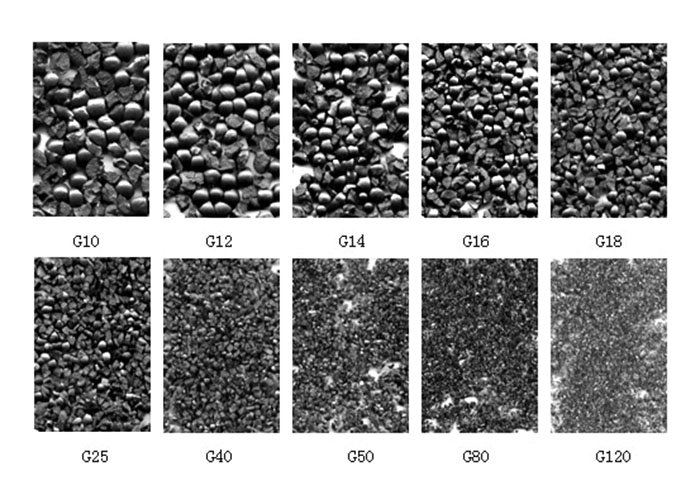
The size of the steel grit also plays a role. Smaller grit sizes like GL 120 Steel Grit may have different coating flexibility requirements compared to larger ones. Smaller grits are often used for more delicate surface finishing, where a more flexible coating can be beneficial to ensure that the coating doesn't chip off easily and can still provide the necessary protection and performance. Larger grits, such as GL 18 Steel Grit, are typically used for more heavy - duty applications. In these cases, the coating needs to be durable enough to withstand high - impact forces, but it still needs to have some level of flexibility to avoid premature failure.

The application environment is yet another crucial factor. If the coated steel grit is used in a high - temperature environment, the coating's flexibility can be affected. High temperatures can cause the coating to expand and contract, and if it doesn't have the right level of flexibility, it can crack. Similarly, in a humid or corrosive environment, the coating may need to be more flexible to prevent moisture from seeping in and causing corrosion of the steel grit.
Let's take a look at some real - world examples to understand these differences better. Suppose you're using Steel Abrasive Grit for shot peening a metal component. The coating flexibility can determine how well the grit adheres to the surface and how effectively it transfers energy to the component. If the coating is too rigid, it may bounce off the surface without providing the desired peening effect. But if it's flexible enough, it can conform to the surface and deliver a more consistent peening action.
In the case of surface preparation for painting, a flexible coating on the steel grit can help in creating a better surface profile. When the grit impacts the surface, a flexible coating can adapt to the irregularities of the surface, removing contaminants more effectively and leaving a surface that is more receptive to paint adhesion.
Now, as a supplier, we understand the importance of getting the coating flexibility just right. We conduct a lot of tests to ensure that our coated steel grit meets the highest standards. We test the coating's flexibility under different conditions, including varying temperatures, impact forces, and environmental factors. This way, we can offer our customers a product that performs well in their specific applications.
If you're in the market for coated steel grit, it's essential to consider the coating flexibility based on your needs. Whether you're in the automotive industry, aerospace, or general manufacturing, having the right coated steel grit can make a big difference in the quality of your work.
We've worked with many customers over the years, and we've seen firsthand how the right choice of coated steel grit can improve efficiency and reduce costs. For example, in a manufacturing plant that was using a low - quality coated steel grit with poor coating flexibility, they were experiencing frequent clogging in their shot - blasting equipment. After switching to our product with optimized coating flexibility, they saw a significant reduction in equipment downtime and an improvement in the surface finish of their products.
So, if you're interested in learning more about our coated steel grit and how the coating flexibility can benefit your applications, don't hesitate to reach out. We're always happy to have a chat and discuss your specific requirements. Whether you need a high - flexibility coating for a delicate application or a more durable coating for heavy - duty use, we've got you covered.
In conclusion, there are indeed significant differences in the coating flexibility of coated steel grit, and these differences are influenced by multiple factors such as the coating material, thickness, grit size, and application environment. As a supplier, we're committed to providing you with the best - quality coated steel grit that meets your unique needs.
If you're ready to take your surface - treatment processes to the next level, let's start a conversation. We're here to help you find the perfect coated steel grit solution for your business.
References
- Industry standards for coated steel grit testing
- Internal research reports on coating flexibility of steel grit
- Case studies from customers using our coated steel grit products


